
CLOSE UP
From Monet to Van Gogh and Kandinsky
Potrebbe interessarti anche

From Monet to Van Gogh and Kandinsky: A Journey Towards Modern Art in Ferrara
How does our way of looking at the world change when painting no longer simply tries to represent it? At Palazzo dei Diamanti, the exhibition From Monet to Van Gogh and Kandinsky. New Perspectives on Nature and Modernity takes visitors through one of the great periods of transformation in European art.
Featuring 120 works arranged across nine sections, the exhibition traces, in less than eighty years, the journey from nineteenth-century landscape painting to the gradual dissolution of reality and the threshold of abstraction.
From Landscape Painting to Impressionism
The journey begins in the nineteenth century, when artists such as Théodore Rousseau and members of the Barbizon School began to look at nature in a new way. Landscape painting moved away from Neoclassical idealisation and became a field for experimenting with light, atmosphere and perception.
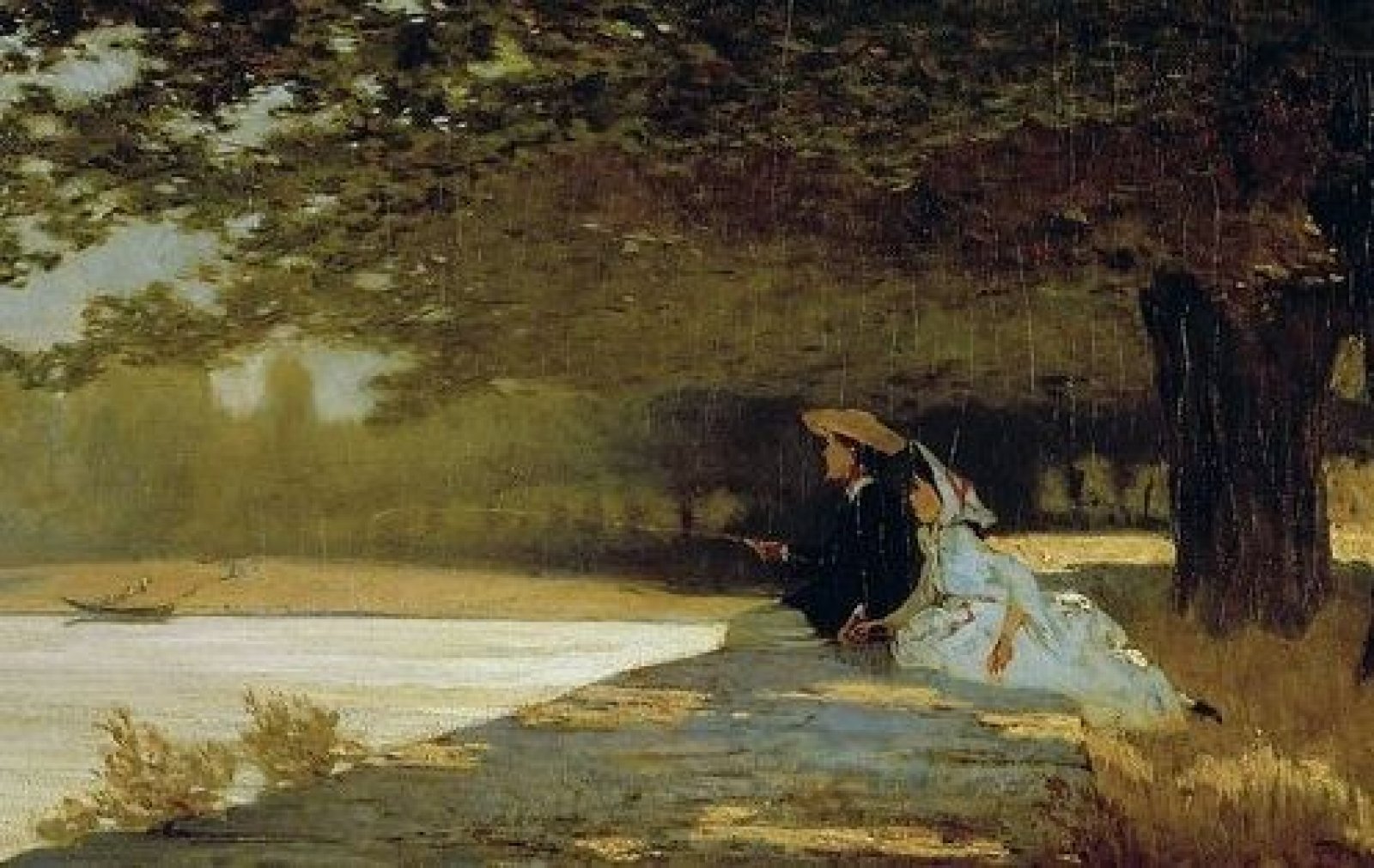
From here, the exhibition moves towards Impressionism. Monet, Sisley, Pissarro and Renoir translated an increasingly fast-moving world onto canvas through immediate brushstrokes and shifting effects of light. Alongside the French artists, the exhibition also explores Italian experiences such as the Macchiaioli, represented by artists including Signorini, Fattori and Sernesi.
As you move from room to room, you can follow this changing way of seeing: the landscape remains recognisable, but its representation becomes increasingly personal.
Van Gogh and the Transformative Power of Colour
With Van Gogh and Post-Impressionism, the exhibition takes another turn. Simply representing what the eye can see is no longer enough: colour and form become tools for interpreting reality and giving it new meanings.
Works by artists including Redon, Previati, Segantini and Signac reveal landscapes increasingly charged with sensations and symbols. This is a key stage in understanding how painting gradually began to move away from the direct observation of reality.
The Modern City Enters Art
It is not only the way of painting that changes, but also what artists choose to depict. Streets, carriages, interiors, entertainment and human figures bring the rhythms of modern urban life onto the canvas.
This part of the exhibition also features Ferrara-born Giovanni Boldini, who worked in Paris, alongside Degas, Toulouse-Lautrec, Renoir and Picasso. The modern city is no longer simply a backdrop: it becomes a subject to observe and interpret in its own right.
With Boccioni and Sironi, speed and energy fragment forms even further, bringing the journey closer to the artistic experiments of the twentieth century.
From Kandinsky to Mondrian, Towards Abstraction
In the final rooms, the connection with visible reality becomes increasingly subtle. With Kandinsky, colours and forms gain a new autonomy, while Mondrian searches for a different kind of order through essential lines and geometric shapes.
Here, the distance travelled from the landscapes in the opening rooms becomes clear. In less than eighty years, you move from the observation of nature to an artistic language that no longer needs to reproduce what the eye sees faithfully.
From Monet to Van Gogh and Kandinsky brings together some of the key developments that transformed European painting between the nineteenth and twentieth centuries, offering the opportunity to experience them within the rooms of Palazzo dei Diamanti.
Palazzo dei Diamanti, Ferrara
19 September 2026 – 10 January 2027
This article was produced in collaboration with Filo Magazine, based on the original contribution by Clelia Antolini.