
ITINERARY
A Journey into the Heart of the City: from the Estense Castle to the Jewish Ghetto
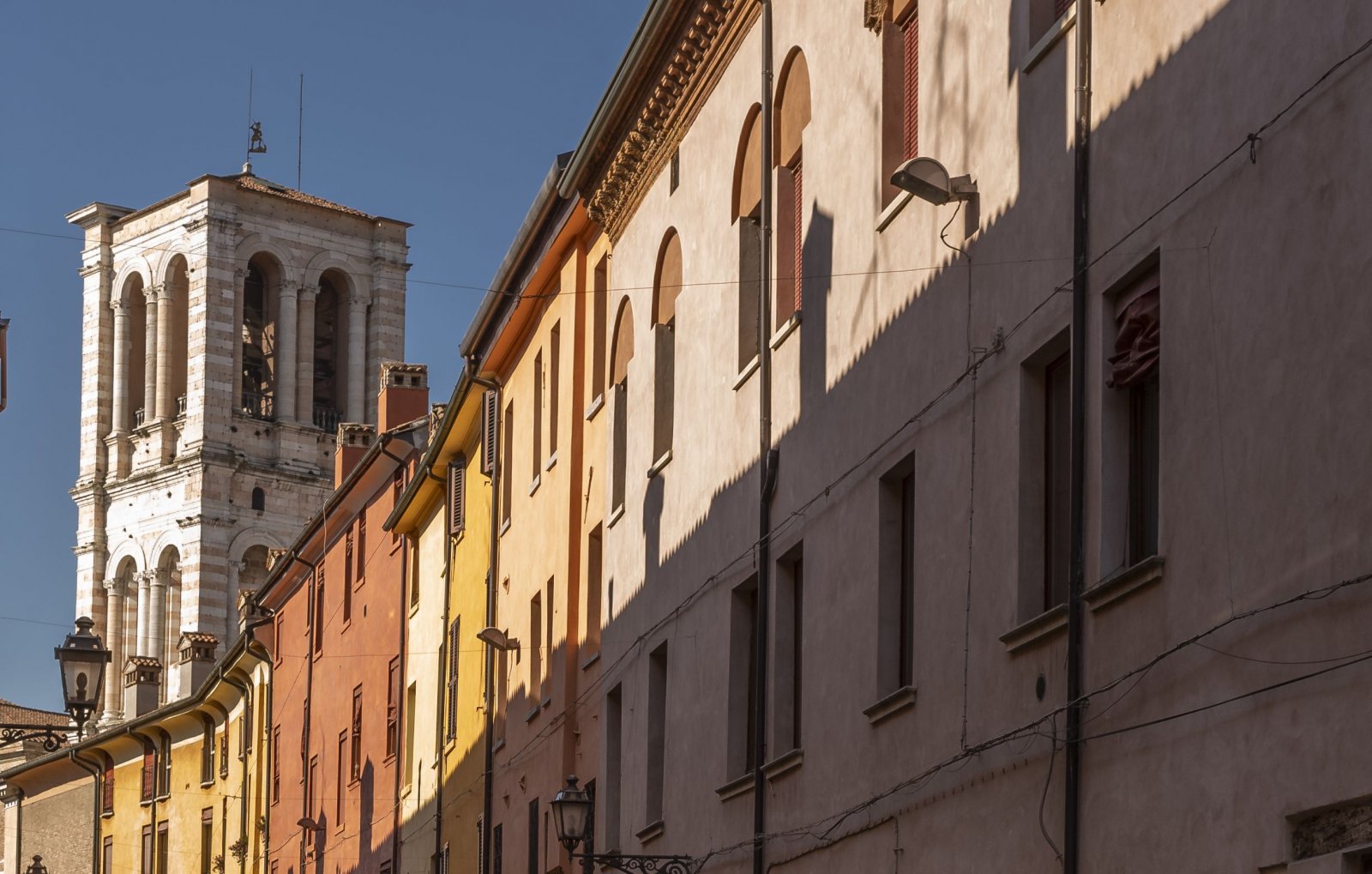
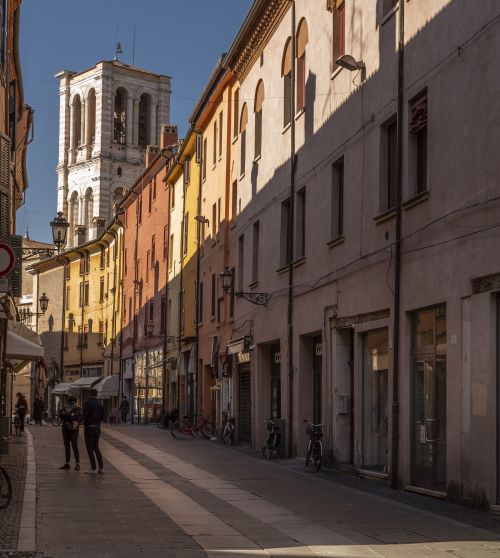
There’s a way to understand Ferrara that doesn’t come from history books or photographs, but from a good pair of walking shoes. Just walk slowly, without rushing, through the network of streets that connects the Castle to the Cathedral, then drift into the narrow lanes of what was once the Jewish Ghetto, and finally reach the low arcades of Via delle Volte. Within just a few blocks, the city tells centuries of power, faith, knowledge and memory. This medieval center hasn’t remained frozen in time: it is still alive, still vibrant, and still full of surprises.
+1
ph. Pierluigi Benini
The Estense Castle: the starting point
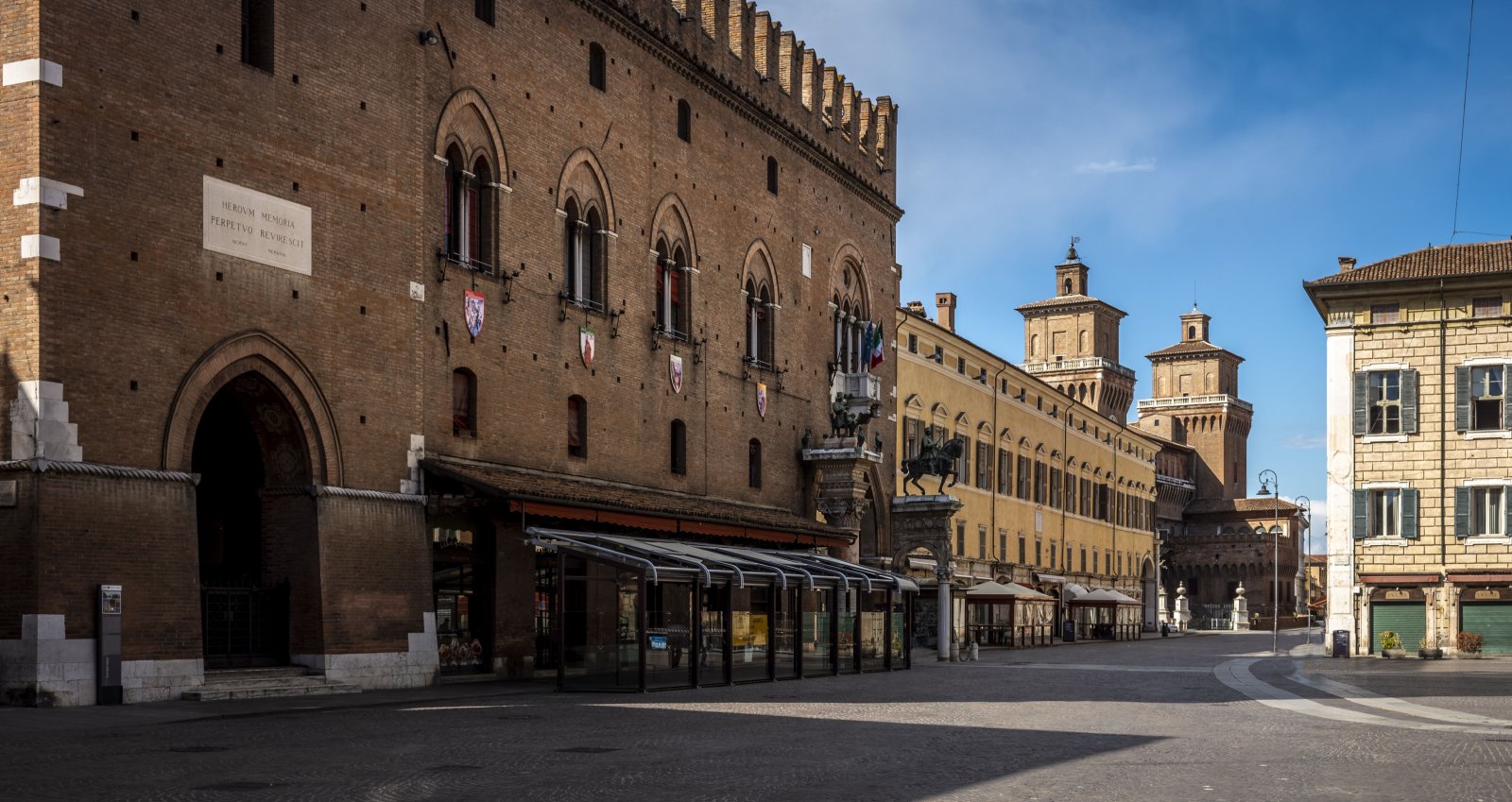
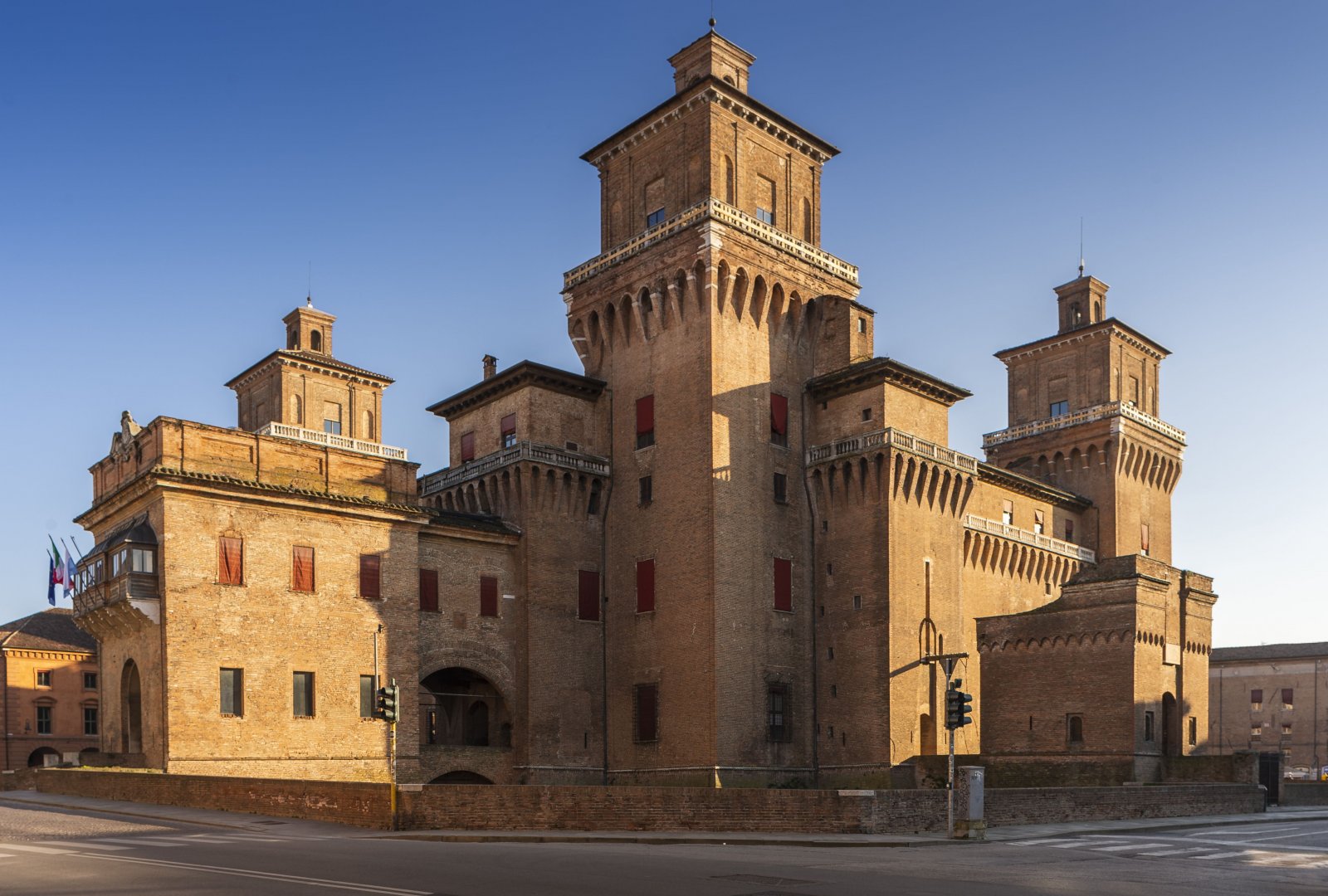
The journey begins with the most iconic landmark: the Estense Castle, with its moat, imposing towers and drawbridges that still extend toward the north and south of the city. Built from 1385 as a defensive fortress, it soon became the residence of one of the most refined courts in Italy.
The Este family were not only military rulers, but also patrons of the arts, builders, and — crucial for understanding the next part of this itinerary — remarkably open toward the Jewish community. When Sephardic Jews were expelled from Spain in 1492, the Este welcomed them to Ferrara, offering refuge and opportunities to printers, physicians, merchants and intellectuals who would contribute to the city’s cultural flourishing.
The Ducal Palace
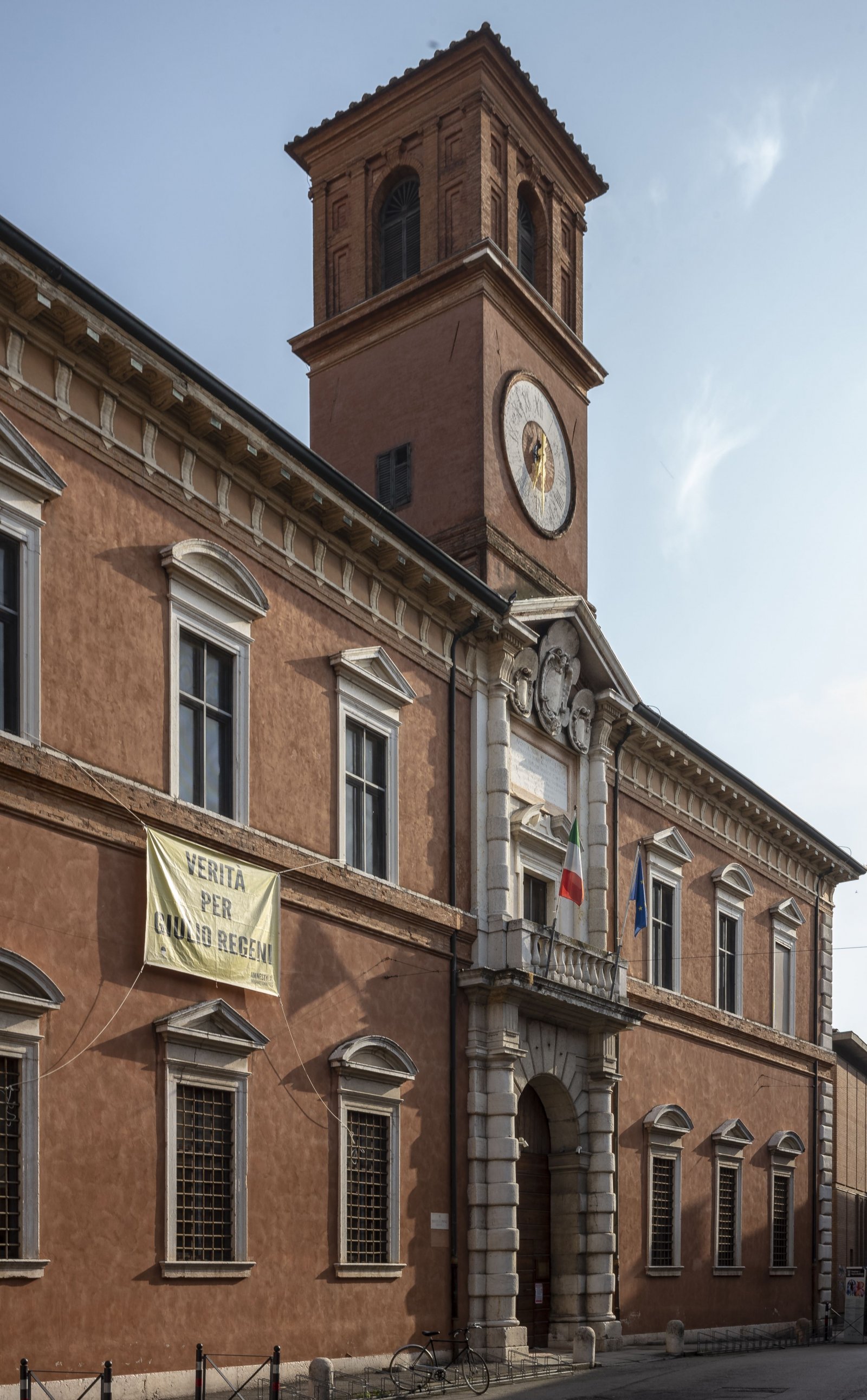
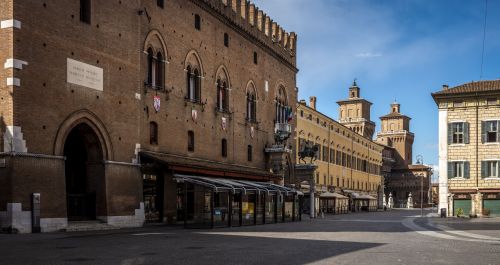
Just a few steps from the Castle, overlooking the same square, stands the Ducal Palace on Piazza del Municipio, representing another face of power in Ferrara: civic, administrative and public.
The square that connects them, now known as Piazza Castello, was the heart of medieval political life — a place where the decisions of the court and those of the city intertwined. It’s worth pausing here to take in this axis: the Castle on one side, the Town Hall on the other, and the Cathedral nearby. You can truly feel history in the city’s core.
The Cathedral and its Museum: faith and art within a single block
The Cathedral of Saint George the Martyr completes this triangle of great importance. Construction began in 1135, and its pink marble façade — partly Romanesque, partly Gothic — along with the arcaded side facing Piazza Trento e Trieste, offers a journey through time, styles and craftsmanship, up to its final additions in the early 18th century.
Just a few steps away, in the former church of San Romano, the Cathedral Museum houses some of the most remarkable works connected to the history of the cathedral and the city. It’s a visit worth taking your time for, with more than a few surprises.
The streets of the Ghetto: a labyrinth of memory
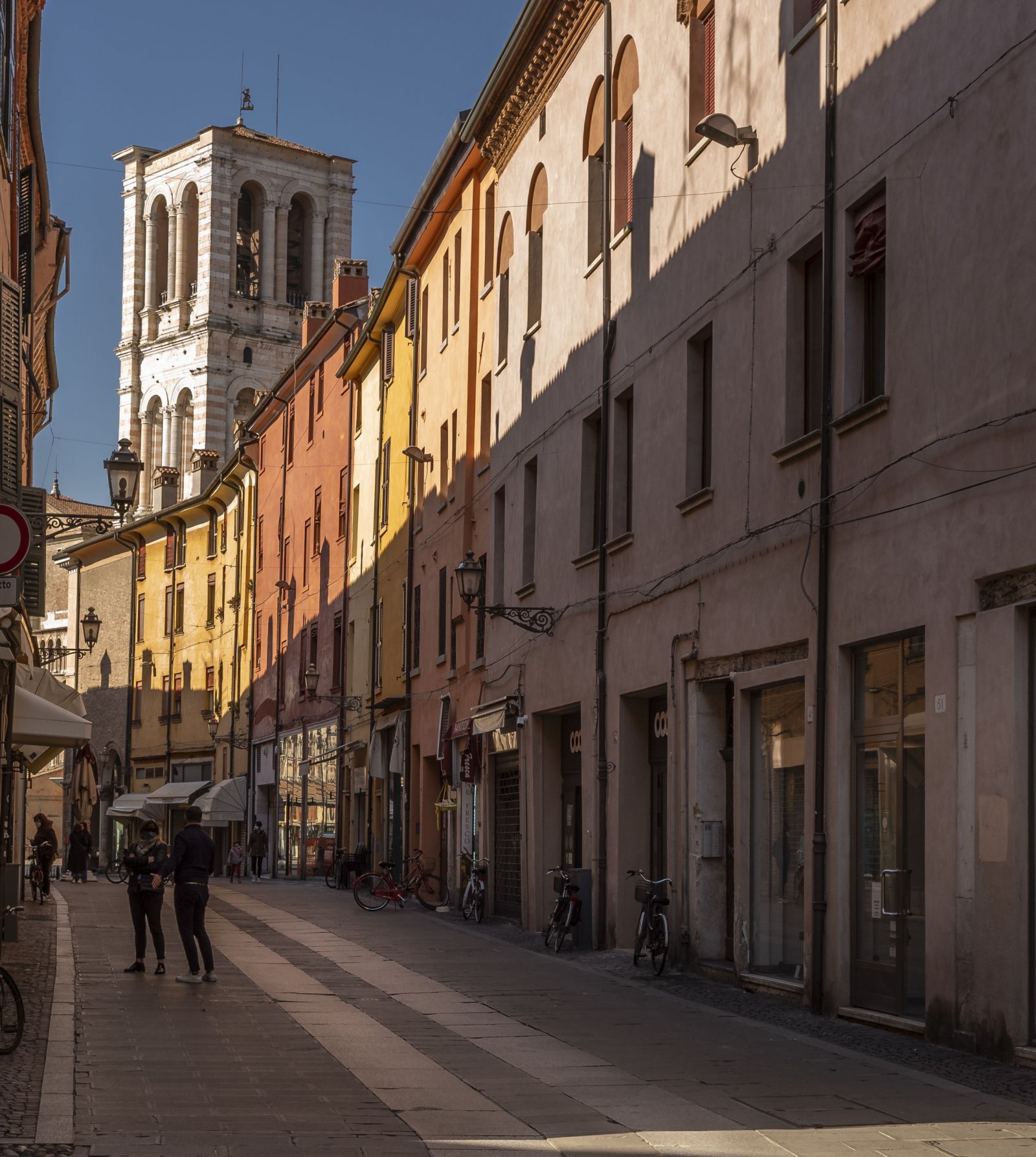
Here, the itinerary changes pace and tone. Via Mazzini — once called Via dei Sabbioni — was the main street of the Ghetto, lined with shops and businesses. Even today, its buildings form a continuous façade, while inside they conceal courtyards and passageways invisible from the street.
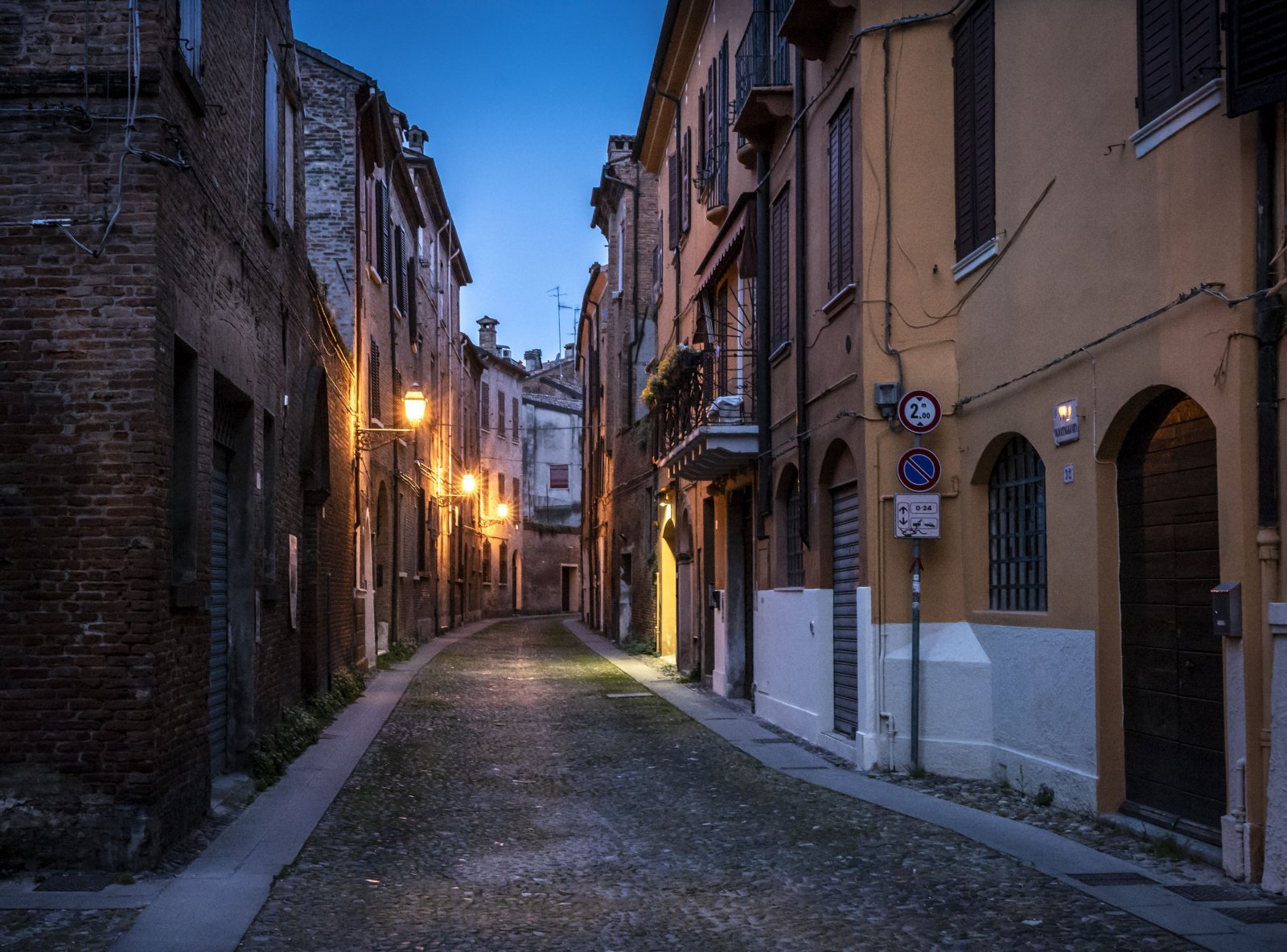
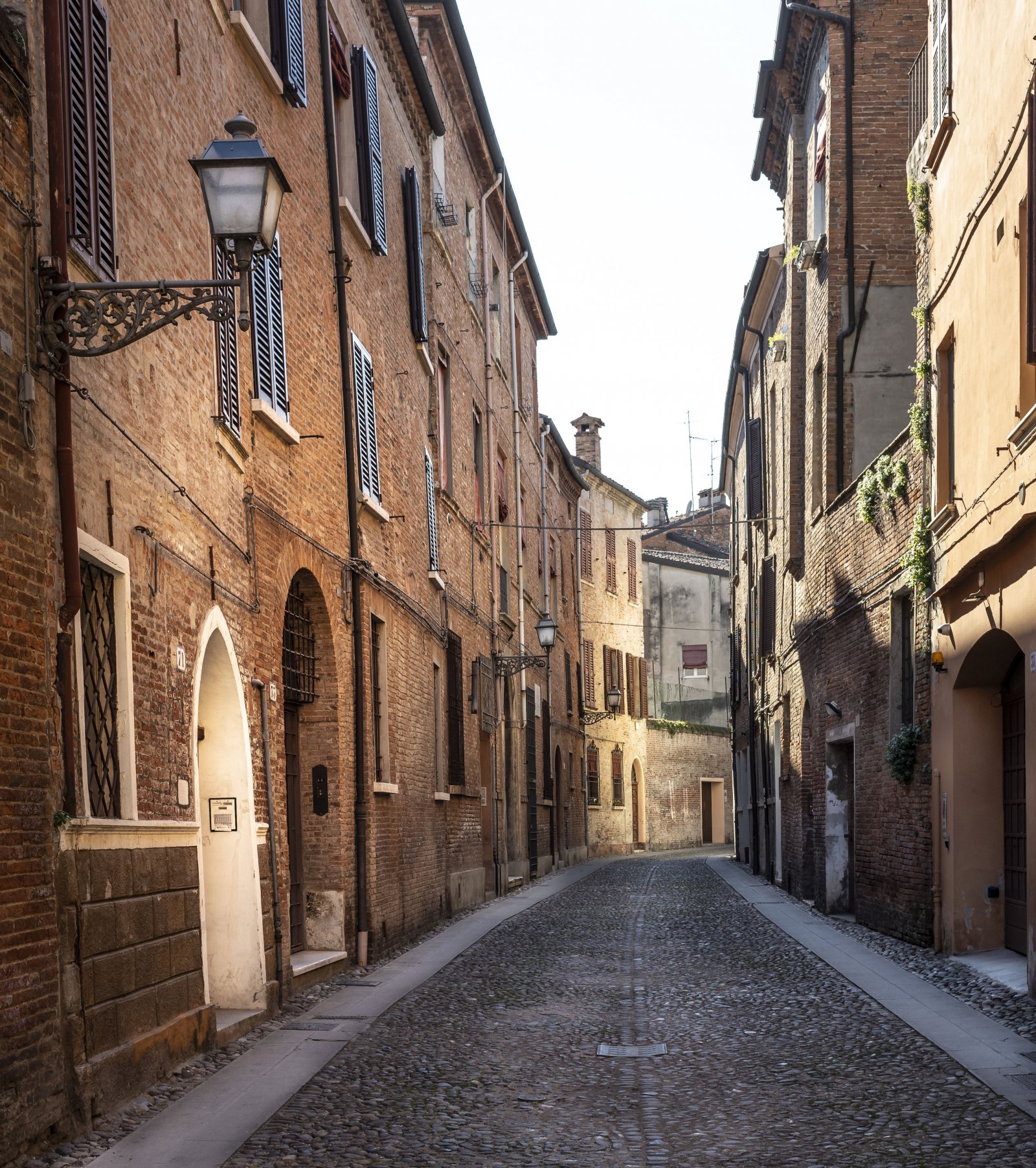
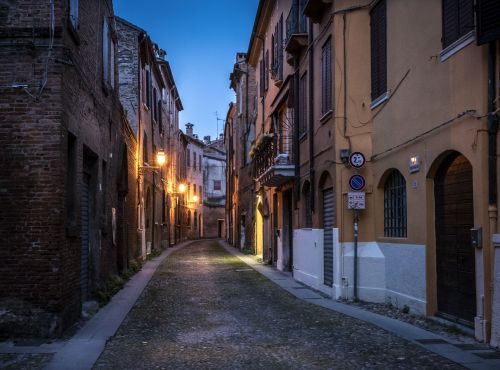
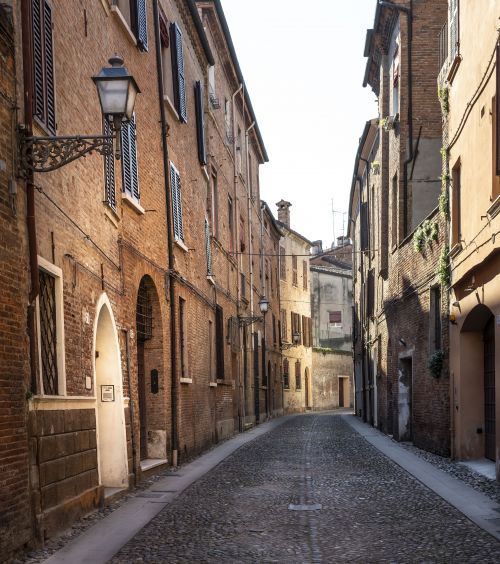
From Via Mazzini, you move into Via Vignatagliata and Via Vittoria: narrower, more residential streets, with exposed brick houses, decorated doorways and wrought-iron balconies. The Ghetto was established in 1624, when Ferrara was already under Papal rule, and for over two centuries enclosed the Jewish community behind five gates that were locked each evening at sunset.
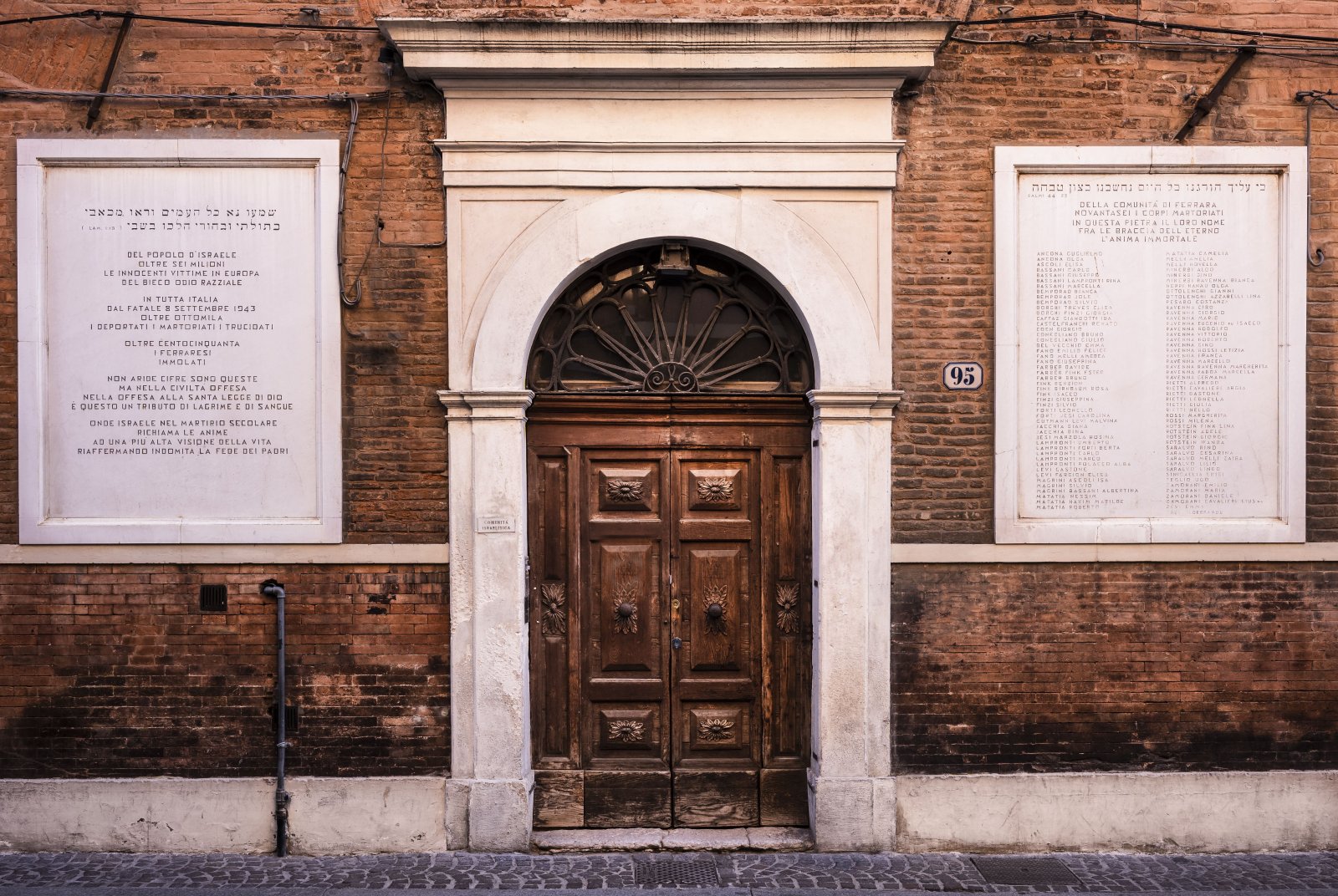
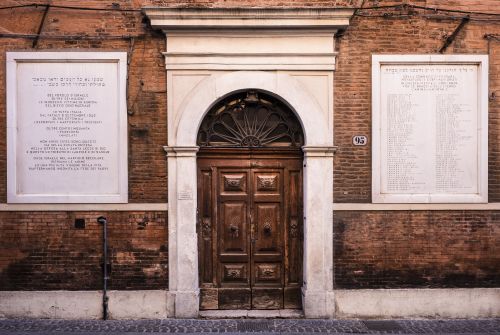
At number 95 Via Mazzini, the synagogue complex still stands today, home to the Jewish Community. Walking through these streets, it is impossible not to sense the presence of Giorgio Bassani, who taught here and set some of the most powerful pages of his Romanzo di Ferrara in this very area. Arrested in 1943 for his anti-fascist activity, he later left the city.
Today, the former Ghetto is a lively district filled with shops, small cafés and traditional eateries — a place that has chosen not to forget, while embracing life.
Palazzo Paradiso
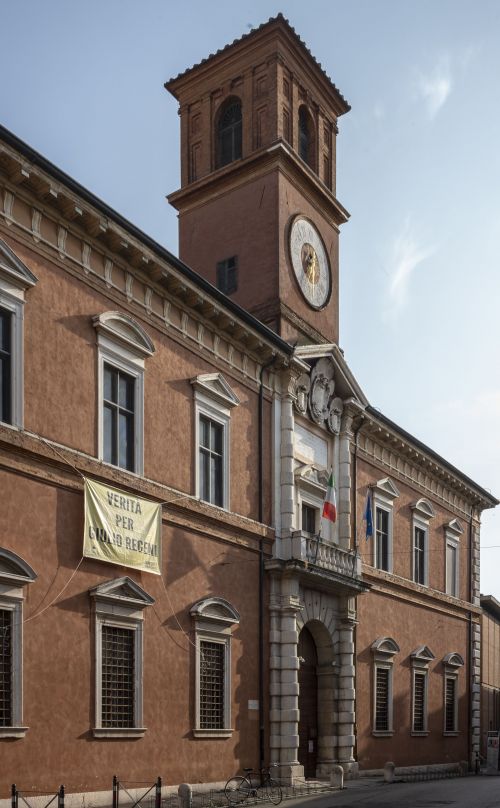
At the end of Via Mazzini, it’s worth making a short detour to the right, onto Via delle Scienze. Here stands Palazzo Paradiso, one of the many Este “delizie” transformed over time into something new: today it houses the Ariostea Library, Ferrara’s main public library.
Since 1801, the palace has preserved the ashes of Ludovico Ariosto. But its hidden treasure lies within: the Giovanni Tumiati Anatomical Theatre, built in 1731, one of the few surviving examples of its kind in Italy. An intimate octagonal room, silent and evocative, where public anatomy lessons were held for about a century. It’s a place where the history of science meets architecture — worth visiting for its atmosphere alone.
It’s no coincidence that the palace stands close to the Ghetto: two worlds side by side, separated by just a few meters and centuries of intertwined history.
Via delle Volte
The final stop is the most physical, the most tangible. Via delle Volte is one of the most evocative and recognizable medieval streets in Ferrara: lined with arches, vaults and suspended passages that once connected riverside warehouses to shops and homes in the city center.
Here you feel the Ferrara of trade, work and everyday life. The dark bricks, filtered light and unexpected quiet — compared to the nearby squares — make Via delle Volte a perfect ending to an itinerary that crosses centuries and different souls of the city. It reveals that beneath its Renaissance elegance, Ferrara has deep and resilient medieval roots.
Ferrara: a city to experience step by step
This itinerary can be completed on foot in half a day, but it can easily fill an entire day if you choose to visit the Cathedral Museum, explore the Anatomical Theatre, or stop at the MEIS — the National Museum of Italian Judaism and the Shoah — located not far from the Ghetto and an essential stop for understanding the history of the Jewish community in Italy.
To reach it and conclude your day, a walk along the ancient city walls is highly recommended.
Ferrara is a city to be seen, experienced and explored slowly — and it is by walking that you truly begin to understand its magic.