
ITINERARY
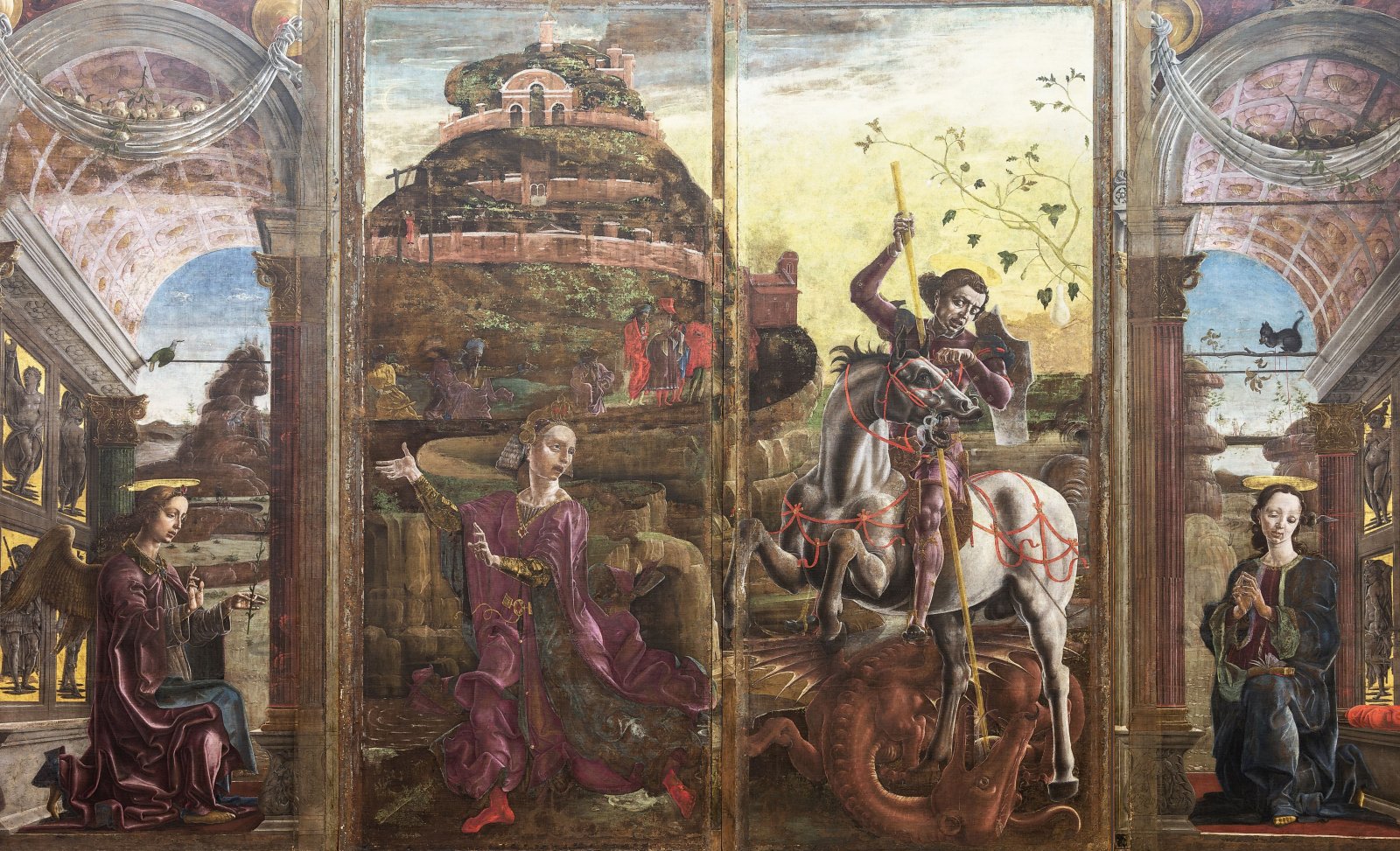
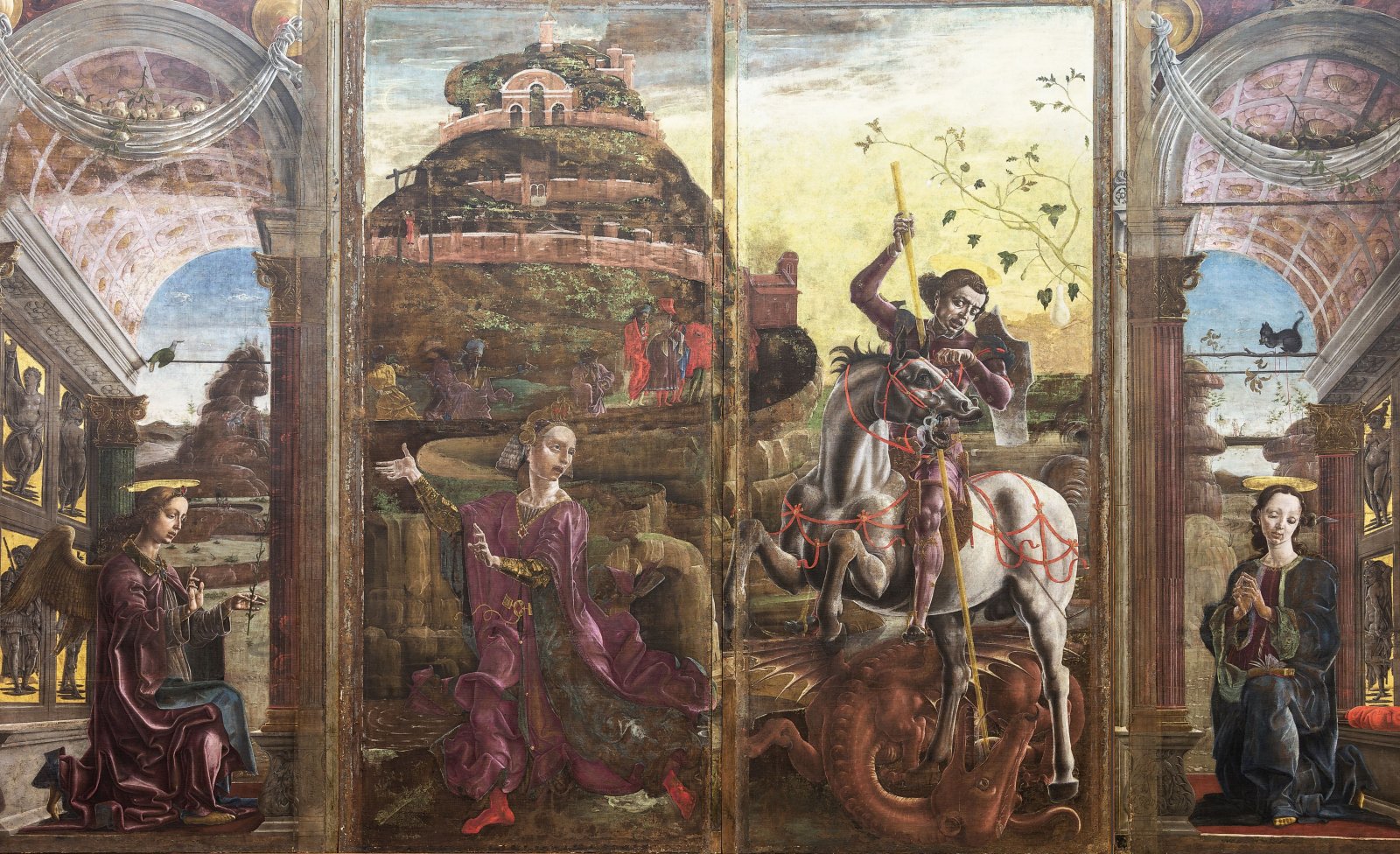
Sulle tracce del patrono: San Giorgio e il Drago
Potrebbe interessarti anche

Ferrara is a city born from water and shaped by its challenge.
That its patron saint is a knight who slays a dragon — a medieval symbol of marshland and hostile terrain — is no coincidence; it almost feels like a calling.
Following the traces of Saint George in Ferrara means embarking on a double journey: a physical one, through churches, squares and castles; and a symbolic one, along the thread that connects faith, power and territory. It’s an itinerary you can complete in a day, but one that carries centuries of history.
+2
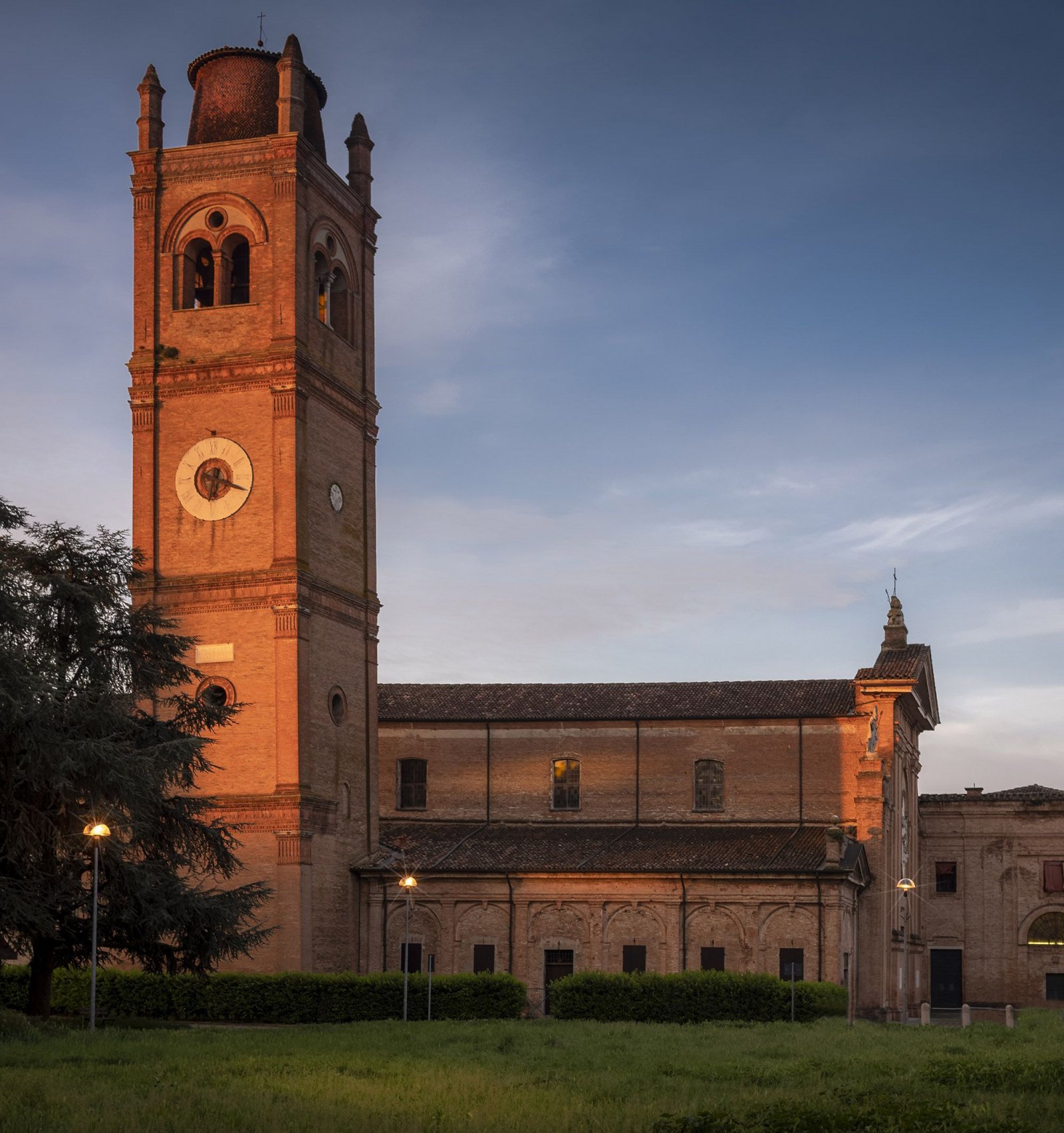
ph. Basilica di San Giorgio e Museo della Cattedrale di Pierluigi Benini
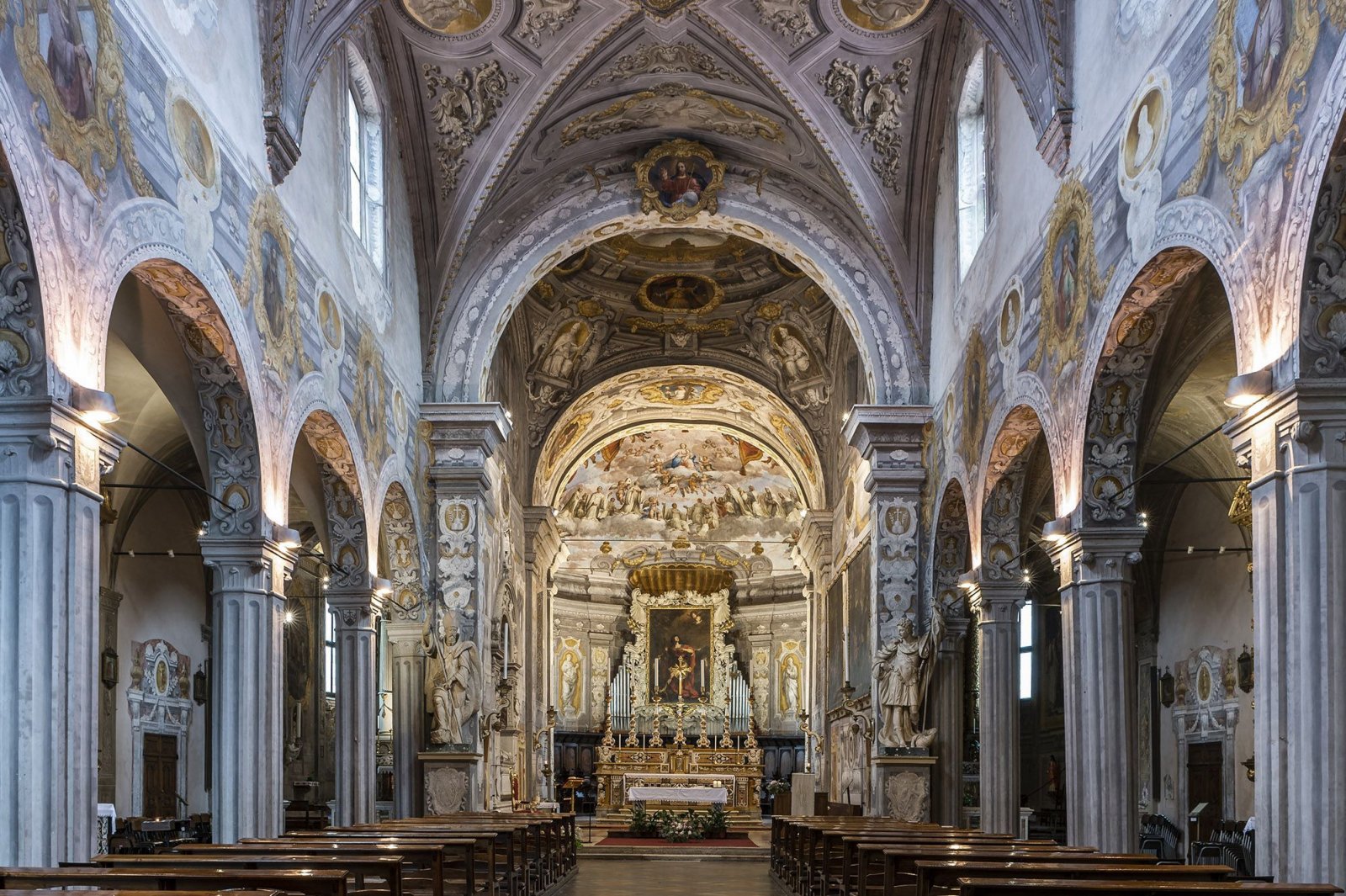
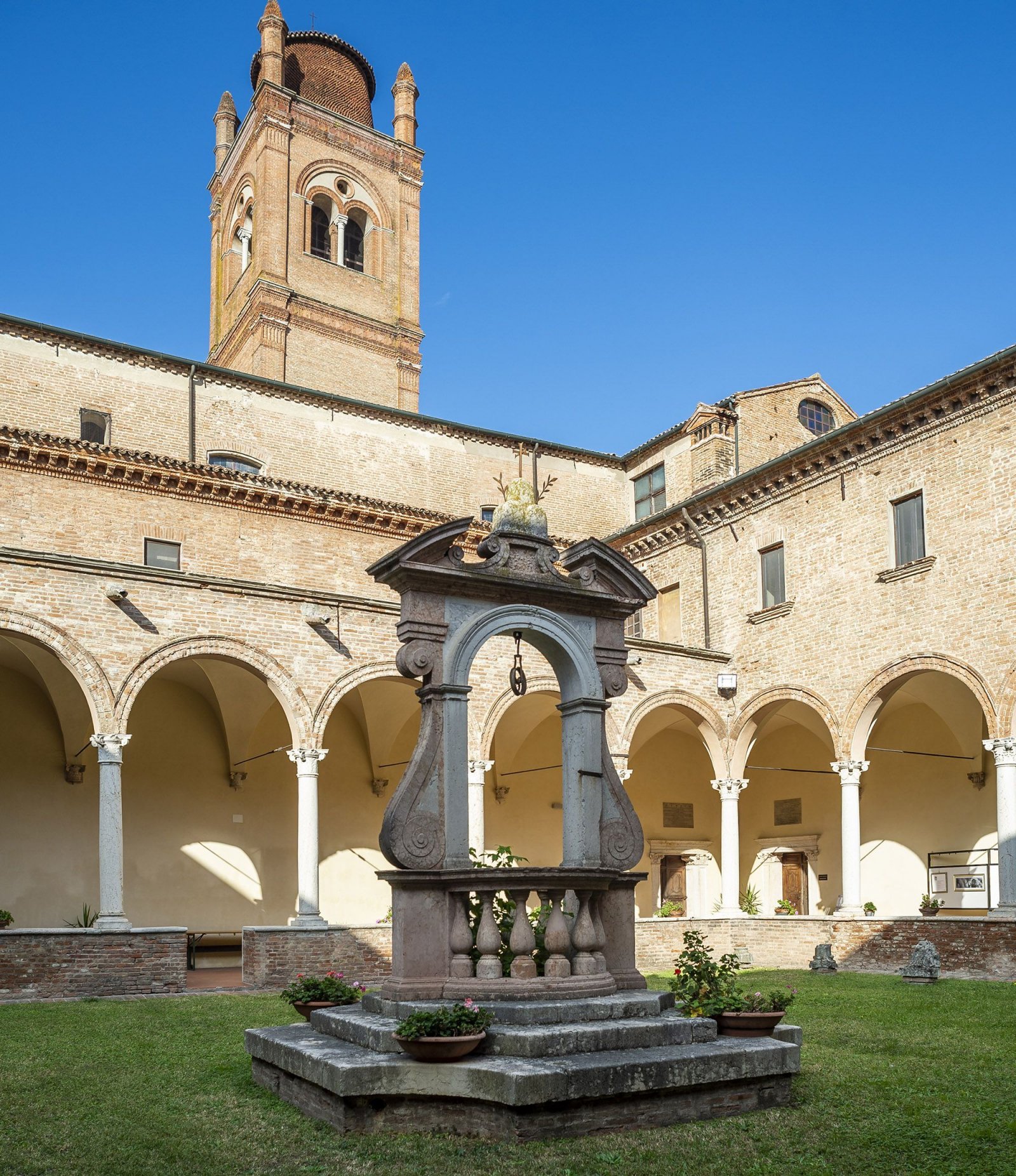
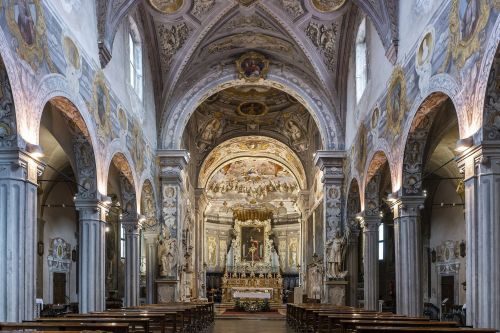
The Basilica of Saint George Outside the Walls: where it all began
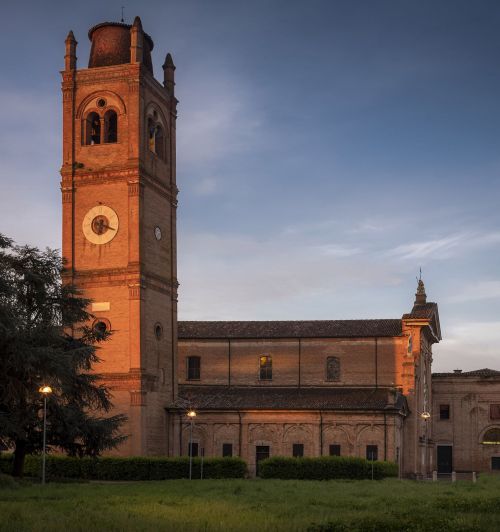
The starting point lies just beyond the historic center, on the opposite bank of the Po di Volano: the Basilica of Saint George, the oldest church in Ferrara, known locally as San Giorgio fuori le mura. This is where the city first took shape — even before it truly became a city.
Built in the early Middle Ages and later modified over time, the church was the religious heart of early Ferrara. Bishops were buried here, and the cult of the patron saint took root in what was then a largely marshy and inhospitable land. Its location outside the present-day center tells the story of how Ferrara gradually expanded, reclaiming land from water step by step.
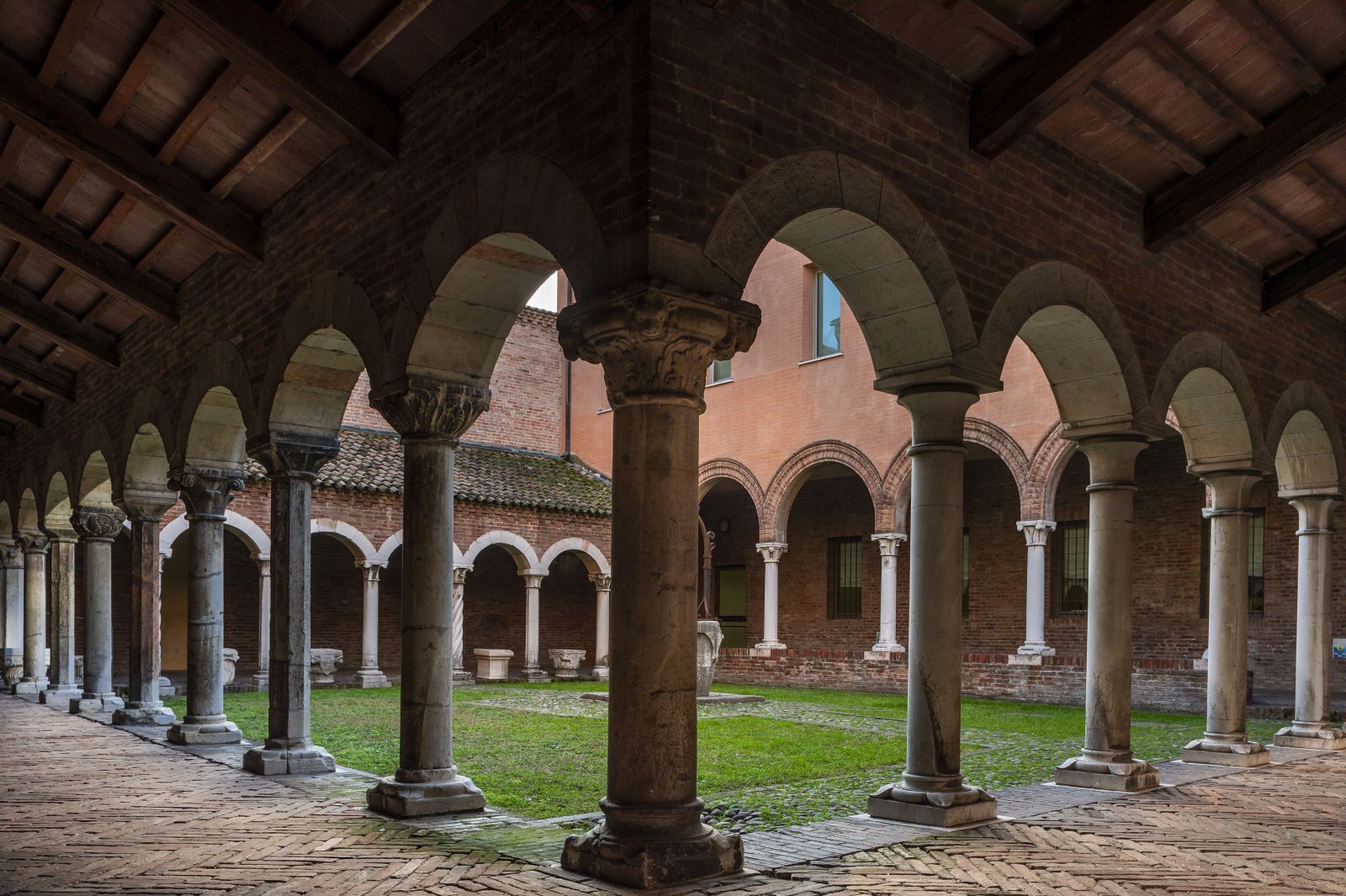
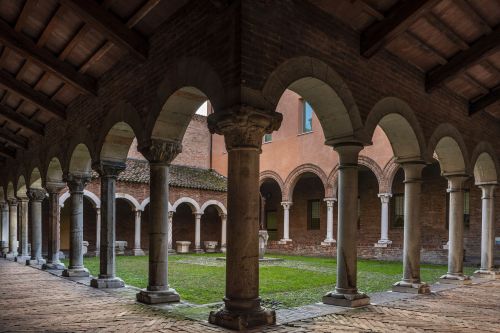
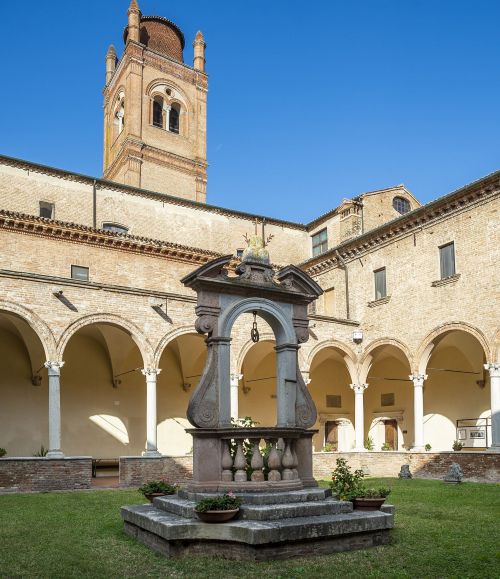
The basilica is flanked by a charming cloister that is well worth a visit.
The Cathedral and the Cathedral Museum
Heading back toward the center — perhaps along a stretch of the Sottomura, where you can admire a well-preserved section of the ancient city walls — the next stop is one everyone knows, but few truly associate with Saint George: the Cathedral.
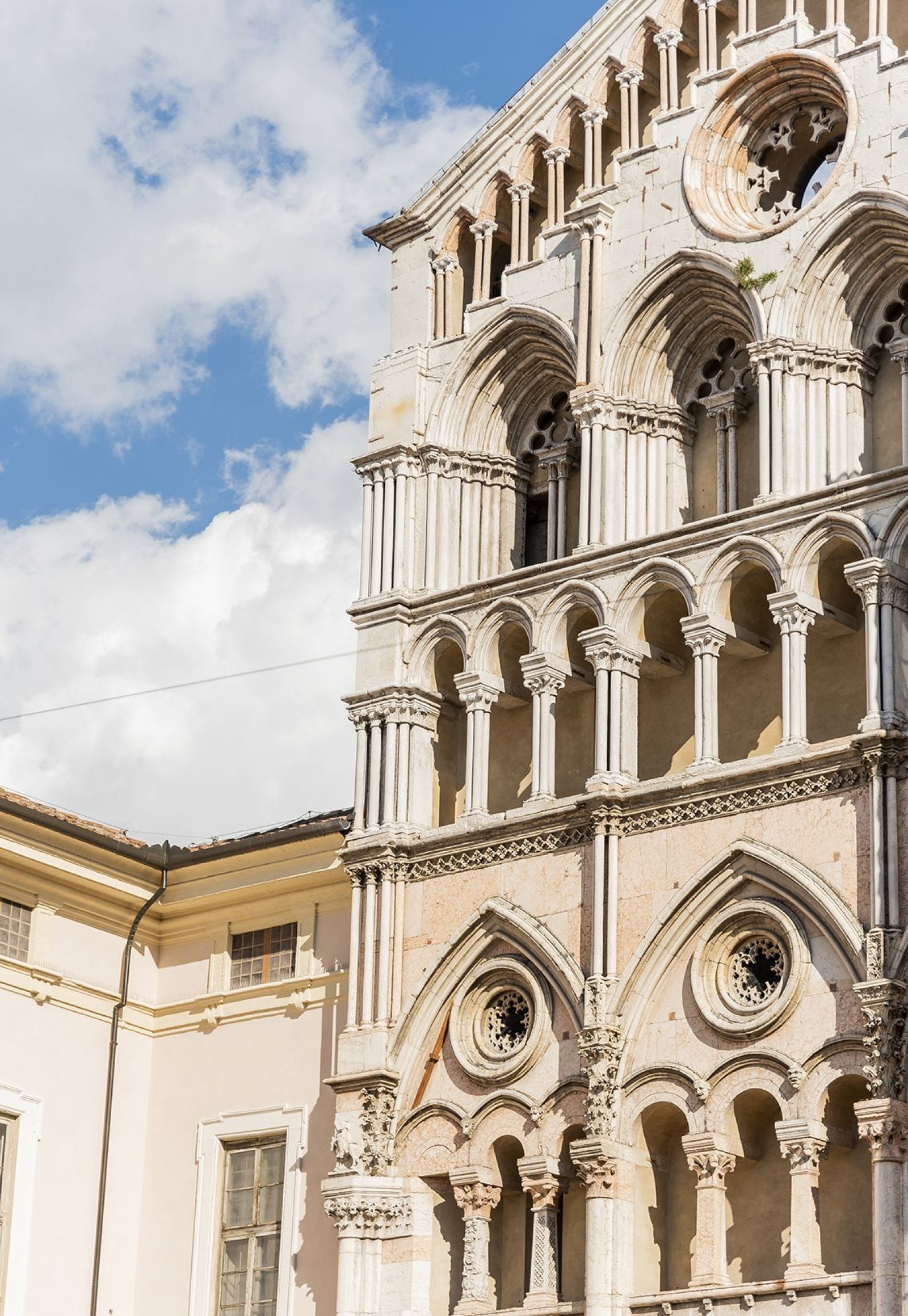
Its official name is the Cathedral of Saint George the Martyr, begun in 1135. Yet locals simply call it the Duomo, as if the saint had become so familiar he no longer needed to be named.
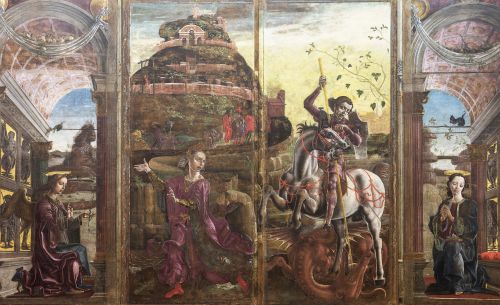
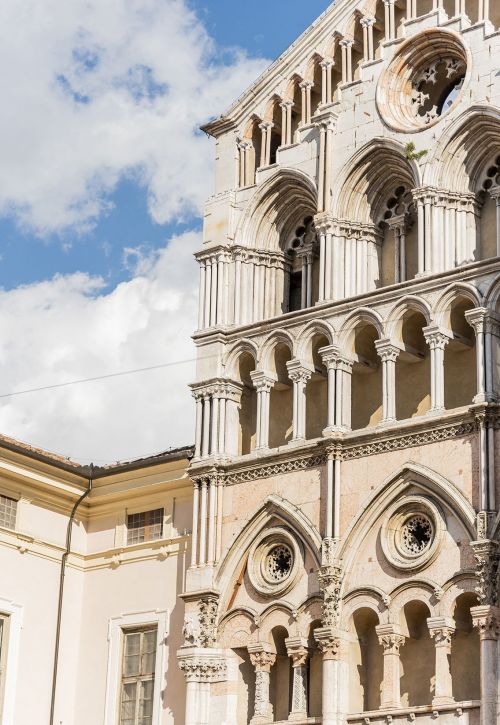
Before stepping inside, take a moment to observe its striking façade: a solid Romanesque lower section gives way to Gothic decorations above the entrance. On the main portal, a lunette by the sculptor Nicholaus depicts Saint George slaying the dragon. It has stood there for nearly nine centuries, guarding the entrance just as the saint symbolically guards the city. Inside, and in the side chapels, Saint George appears again in bronze, marble and paint.
Just a few steps away, in the former church of San Romano, the Cathedral Museum preserves some of the most remarkable testimonies of the cult of Saint George in Ferrara. It’s a visit well worth your time, full of unexpected discoveries.
The Este Castle and the Saint of Power
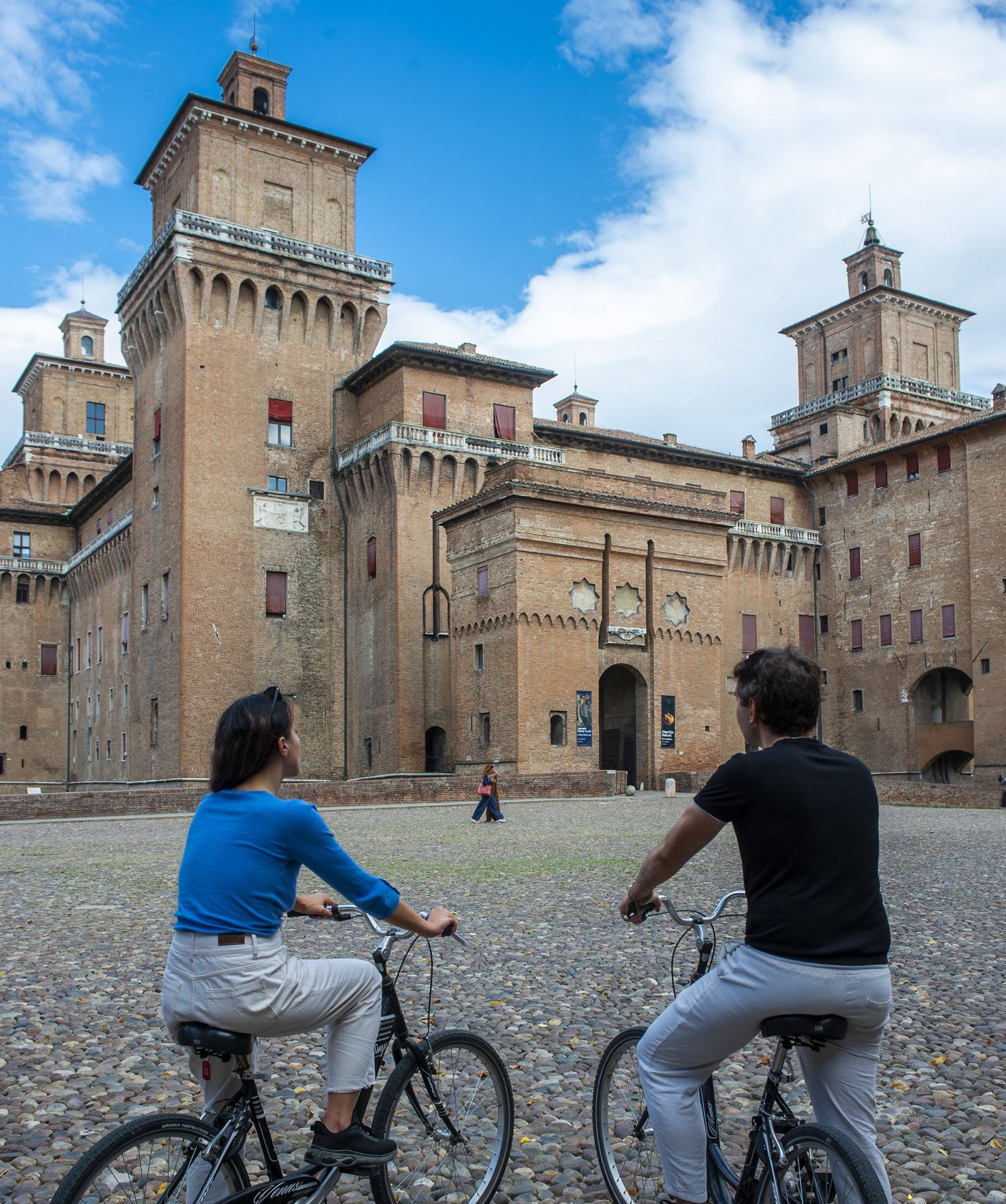
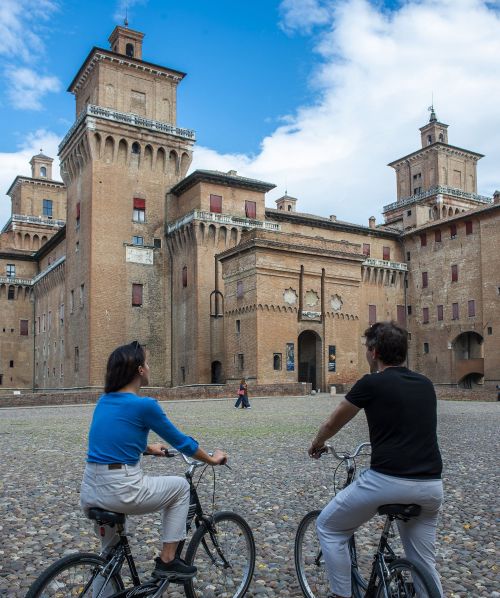
A short walk from the Cathedral brings you to the Estense Castle, where the connection between Saint George and political power becomes clear. The Este family, who ruled Ferrara from the 13th century until its transfer to the Papal States, adopted the patron saint as a political symbol.
The Este were not only great patrons of the arts, but also master land reclaimers. The land surrounding Ferrara was once marshy, difficult and hostile. Draining it and transforming it into a city was an act of power — and Saint George, the dragon-slayer, became the perfect emblem of that transformation.
La Fiera di San Giorgio: dal mito alla festa
Every year on April 23rd, Ferrara celebrates its patron saint.
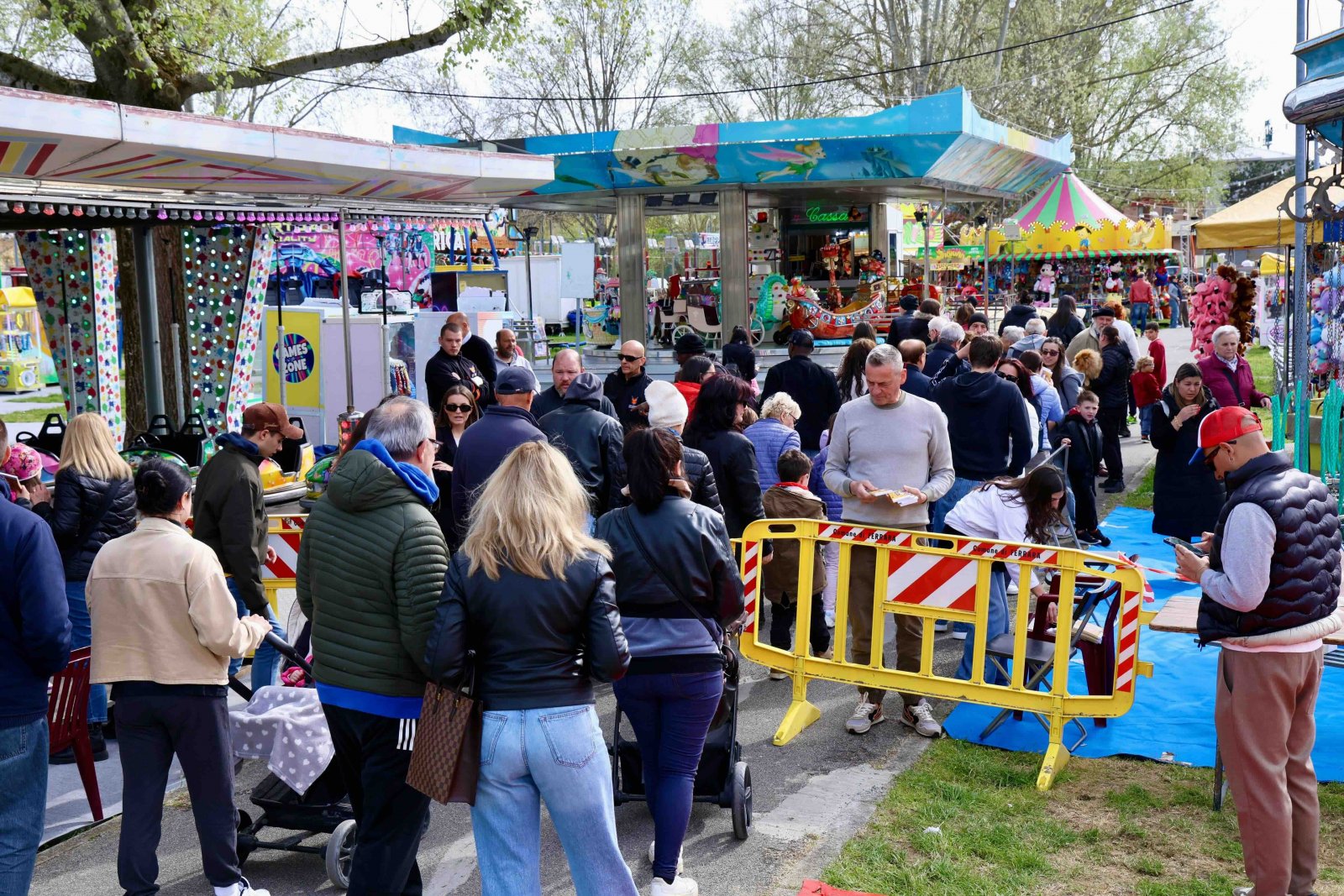
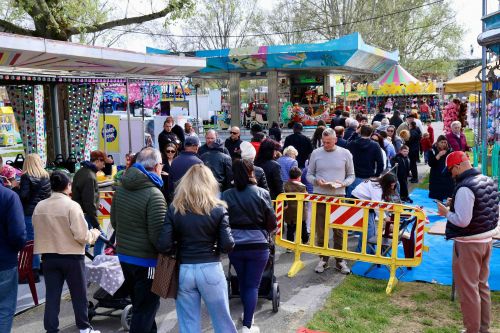
The Saint George Fair, with around 150 stalls offering crafts, local products, treats and street food, is more than just a market. It is one of the city’s oldest traditions, dating back to the Middle Ages, when fairs were traditionally held on the feast day of the local saint.
Today, the fair is when myth becomes community. Streets fill with people, locals gather, and visitors arrive to experience the city like a true local. Saint George is no longer just a figure in stone or fresco, but a living presence made of encounters, flavors and voices. Traditionally, the market takes place just a few hundred meters from the Basilica of Saint George and the ancient district that surrounds it, along Viale Alfonso I d’Este, right beside the city walls.
And for the youngest visitors — and young-at-heart travelers — the celebrations also include a funfair, which usually stays in the city throughout the month of April.
Discover the program of the Saint George Fair 2026.
At the end of this itinerary, looking around, it becomes clear why Saint George and Ferrara belong to one another.
A city that had to earn every inch of land, that transformed marsh into beauty, that built its identity on the boundary between water and earth, could only choose as its patron the knight who defeats the dragon.
Following his traces ultimately means seeing Ferrara with new eyes.