
ITINERARY
Step by Step Through 20th-Century Ferrara
Potrebbe interessarti anche

Ferrara isn’t only about the Middle Ages and the Renaissance. As you walk through the historic centre and along its tree-lined avenues, you’ll also find the traces of a city that, throughout the 20th century, embraced new ideas of architecture and collective life.
This walking route guides you through buildings, spaces, and stories from a century that left a tangible mark on Ferrara’s urban fabric, inviting you to stroll (and look up) with curiosity.
And let’s be honest: most of us now have smartwatches and step-counting apps nudging us toward the famous 10,000 steps a day. With its compact, pleasant-to-explore centre, Ferrara is perfect for turning a wellness goal into an authentic discovery. Often, it’s only on foot that you notice details you’d miss by car, or even by bike.
+1
The Monumental Aqueduct and the Farmers’ Market
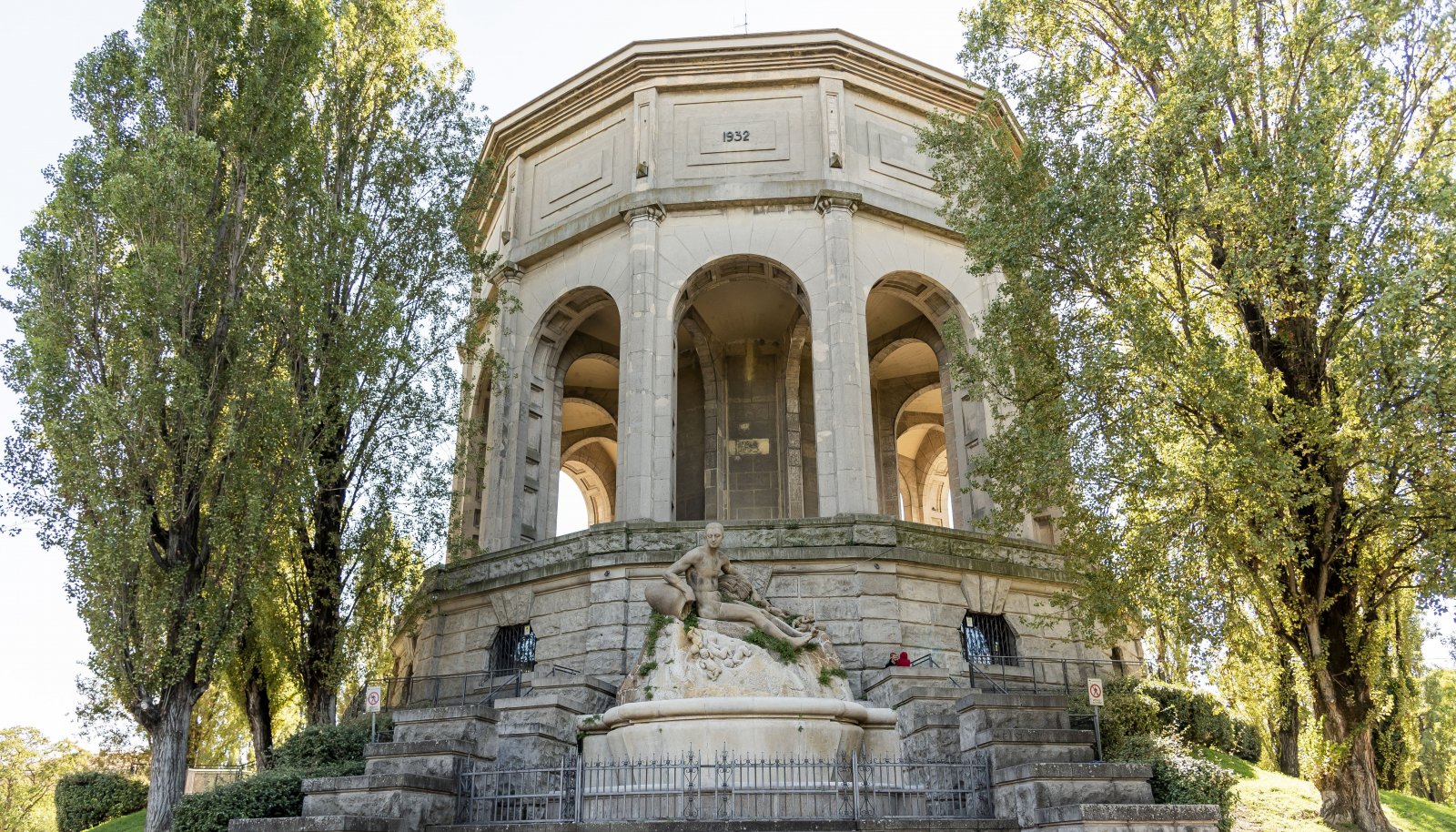
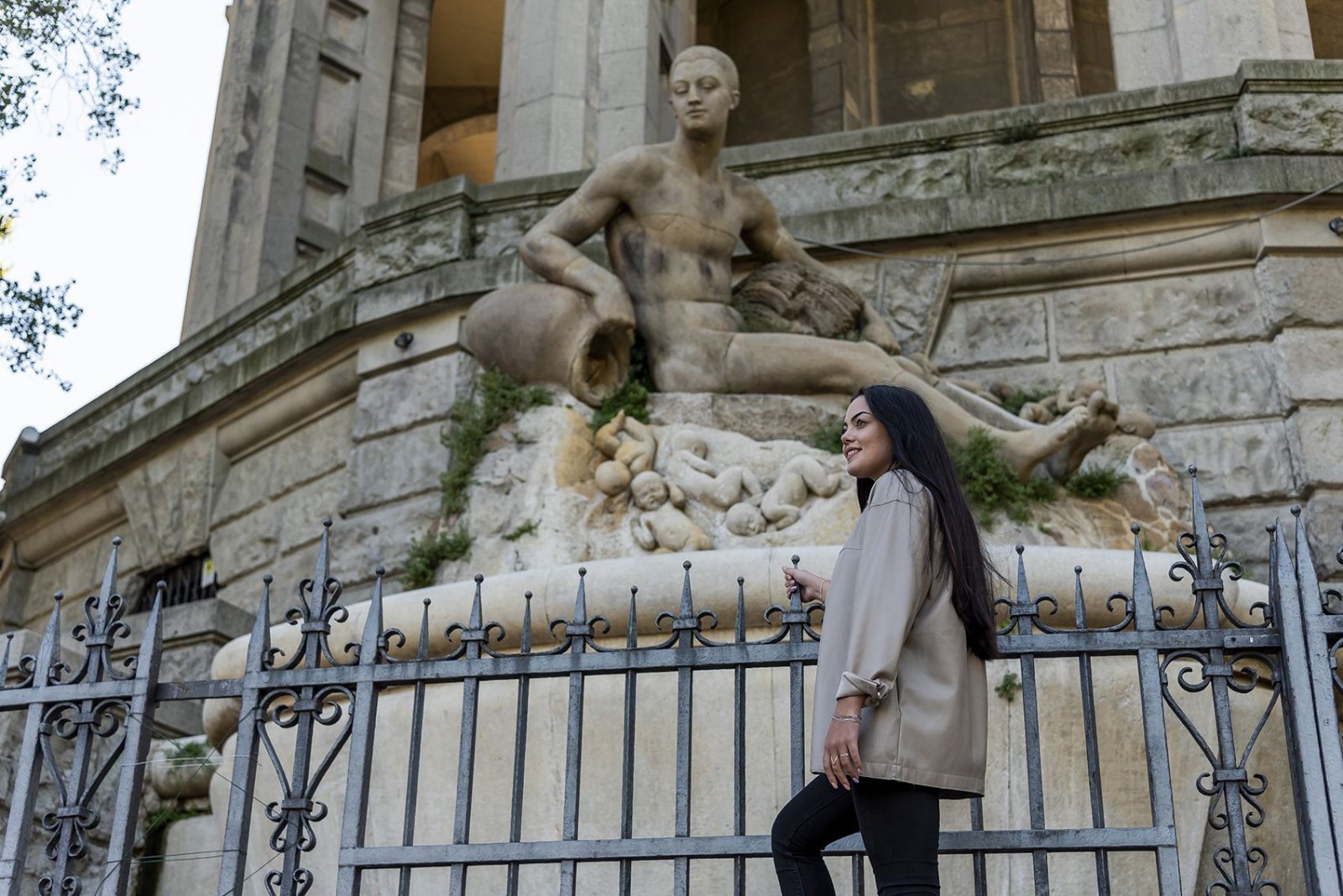
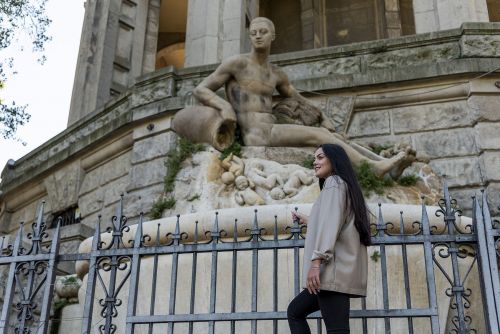
Start at the Monumental Aqueduct (Piazza XXVI Maggio), built between 1930 and 1932 as a scenic urban landmark for the city’s modern expansion. Nearly 40 metres tall, it is one of the symbols of 20th-century architecture in Ferrara: functional yet theatrical, it dominates the neighbourhood with its cylindrical form and the central fountain representing the Po River and its tributaries.
In the ring that surrounds the aqueduct, every Thursday morning you’ll find the local farmers’ market, where you can browse fresh, seasonal produce from the countryside around Ferrara, an ideal first taste of the local experience.
Villa Melchiori
Continue to Villa Melchiori (Viale Cavour 184), one of Ferrara’s finest examples of Liberty / Art Nouveau architecture. Designed by Ciro Contini and inaugurated in 1904, it blends French-Belgian decorative touches with the distinctive Italian Liberty style of the period. This private residence, along with its garden, captures the meeting point between bourgeois taste and early 20th-century architectural experimentation.
Palazzo dell’Aeronautica
A few minutes later you reach the Palazzo dell’Aeronautica (Viale Cavour 118), built between 1935 and 1937, designed by Giorgio Gandini with works directed by Carlo Savonuzzi. Although it is not usually open to visitors, its exterior is a must for lovers of modern architecture in Ferrara: rationalist design, strong perspectives, and geometric details make it a key landmark in the city’s 20th-century urban landscape.
Palazzo delle Poste
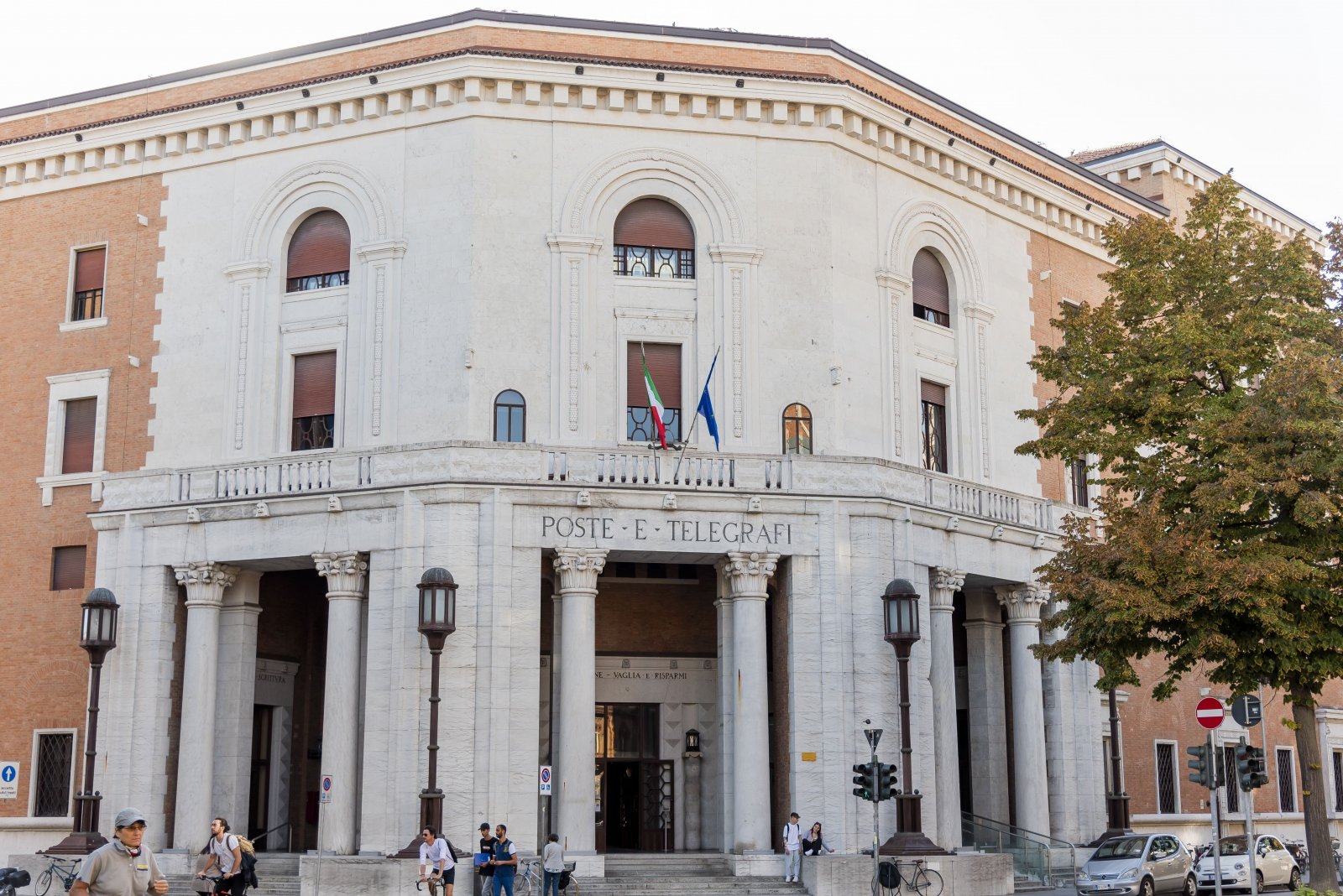
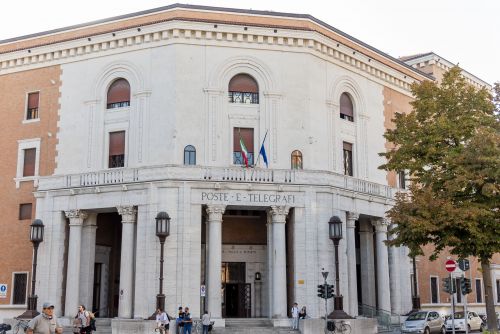
Also on Viale Cavour stands the Post and Telegraph Building, constructed between 1927 and 1929 to a design by Angiolo Mazzoni and inaugurated in 1930. It is a classic example of Italian public architecture of the period: clean lines, fine materials, and a restrained elegance that still speaks of that era’s ambition for modernity.
Chamber of Commerce
Designed between 1928 and 1929 by Savonuzzi Boari, the Chamber of Commerce rises on the site where Ferrara’s first cinema, the Edison, once stood. Its language echoes 16th-century classicism. The building unfolds over two levels, and the entrance portal, framed by four columns supporting the upper balcony, is enriched by two sculptural figures: allegories of the Po and the Reno, a clear reference to Ferrara’s territory. The overall impression is one of solidity, balance, and a symbolic link to local resources, values at the heart of a public economic institution.
The “Novecento” Quadrivium
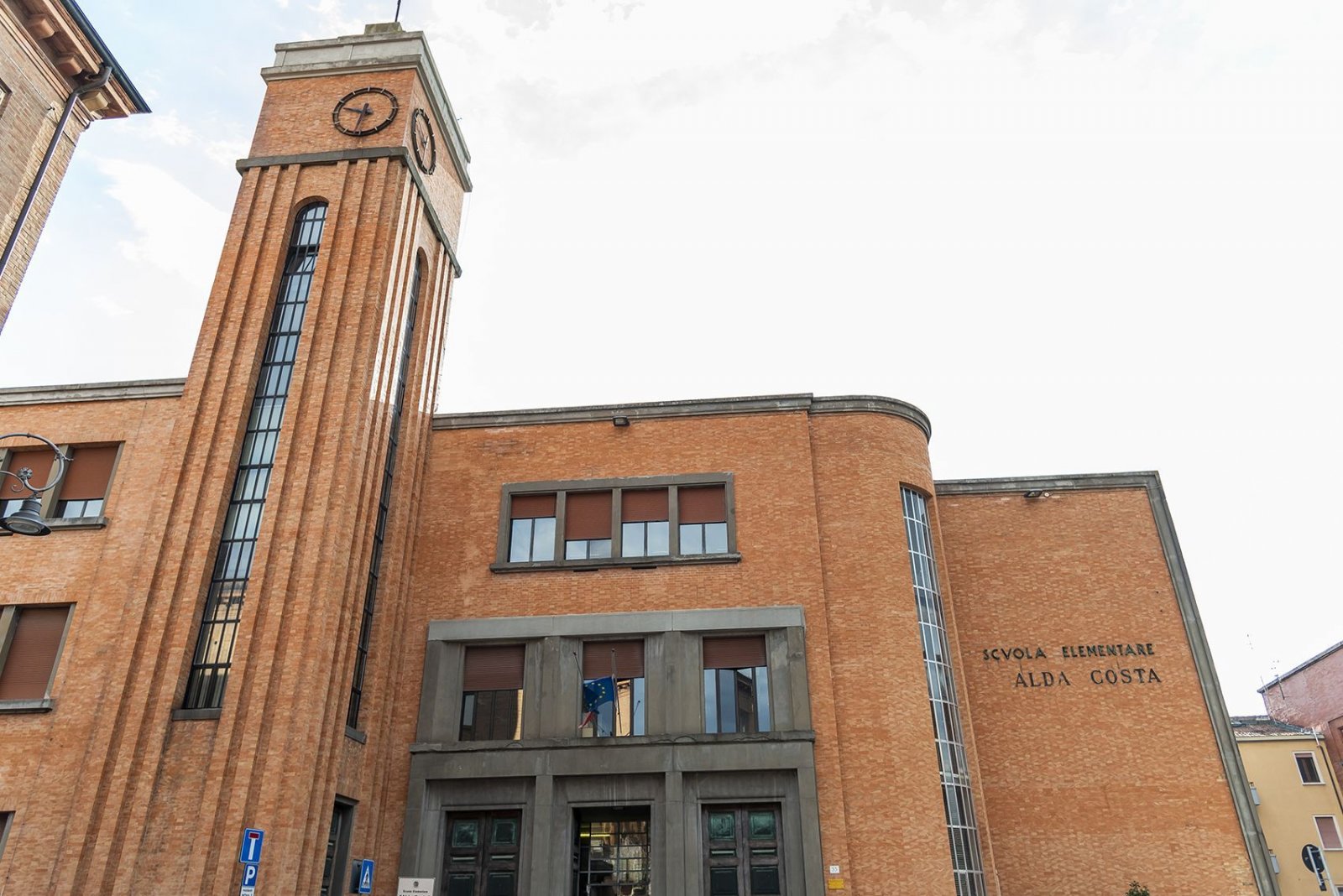
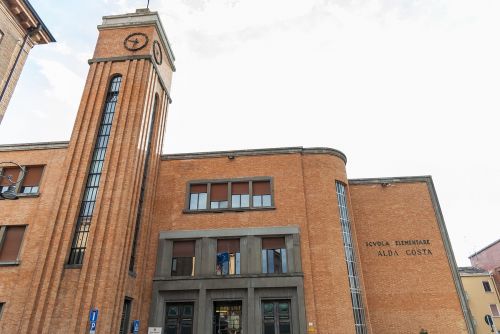
Heading toward the inner city, you arrive at the Quadrivio Novecentista, one of the clearest examples in Ferrara of the architectural interventions of the Fascist period. At its centre is the Alda Costa Primary School, built between 1932 and 1933 to a design by Carlo Savonuzzi. At the time it was dedicated to Umberto I: a compact, essential rationalist building, conceived for accessible, modern education.
Around it are the other “pillars” of the quadrivium: music, represented by the Girolamo Frescobaldi Conservatory and its auditorium; science, in the former Institute of Natural History, today the Natural History Museum; and leisure, once assigned to the Provincial Fascist Dopolavoro, now the Complesso Boldini, hosting events, cinema, and cultural activities. It’s a corner of the city that, through architecture, reveals the ideology and social vision of the interwar years.
Spazio Antonioni
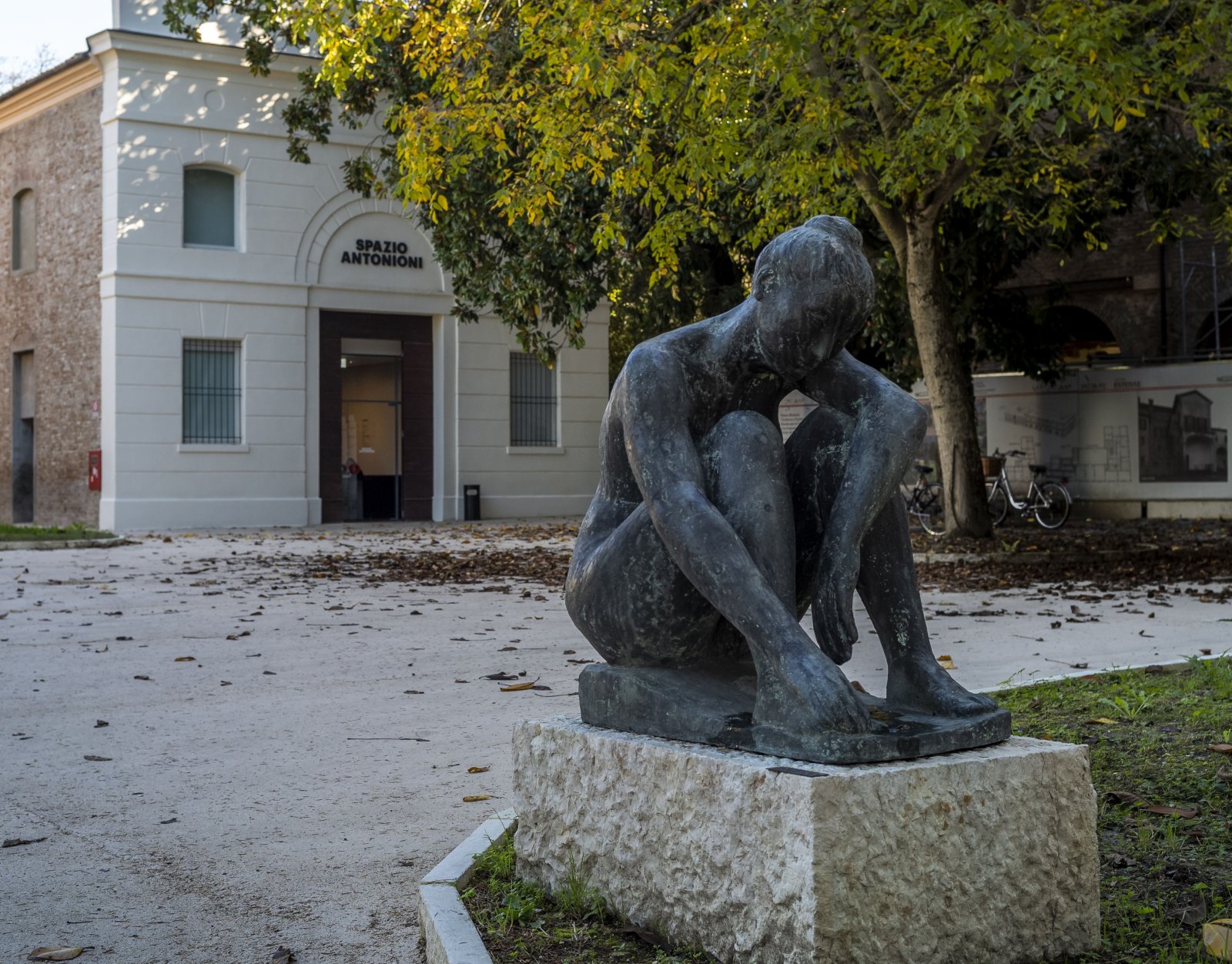
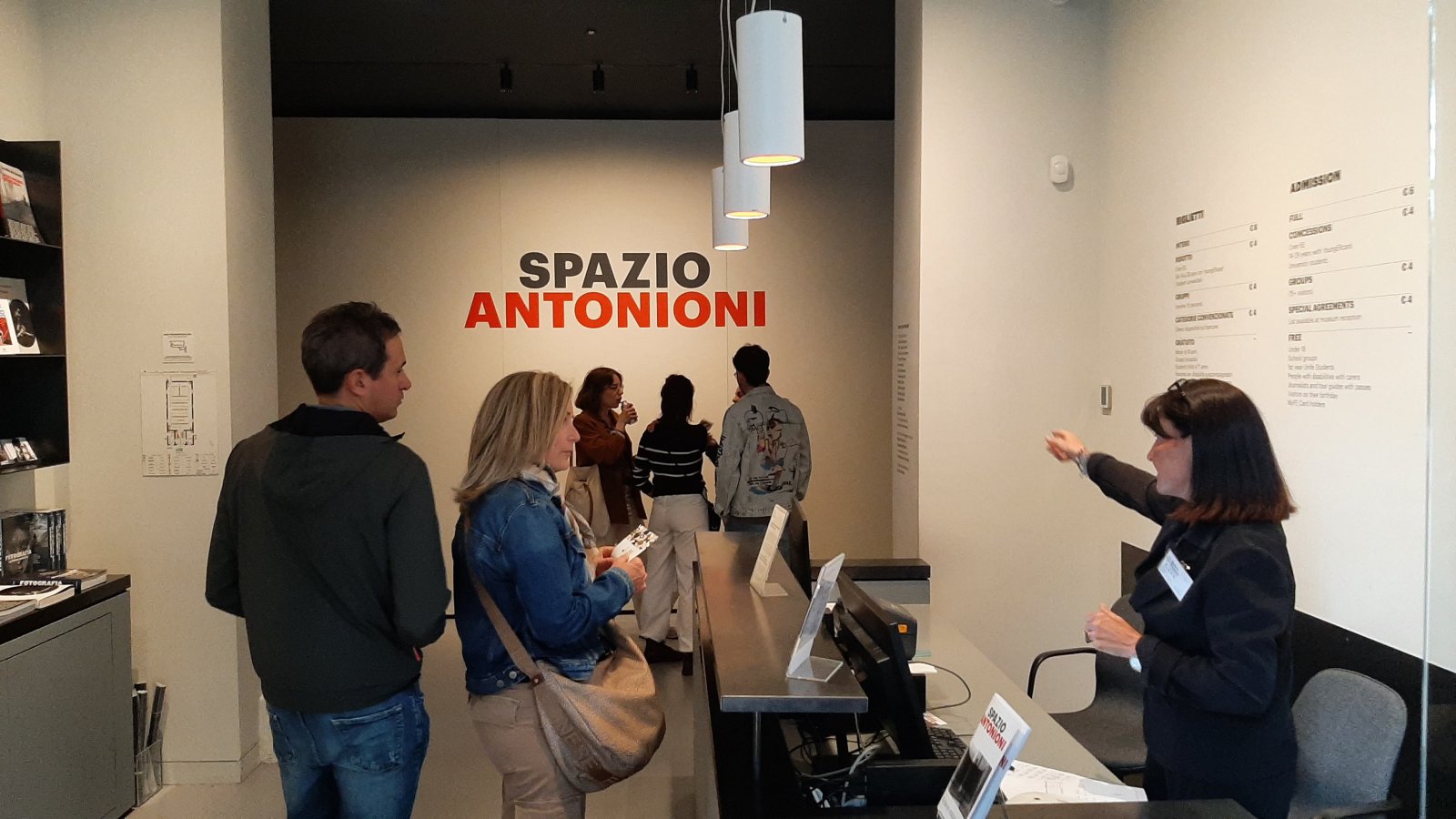
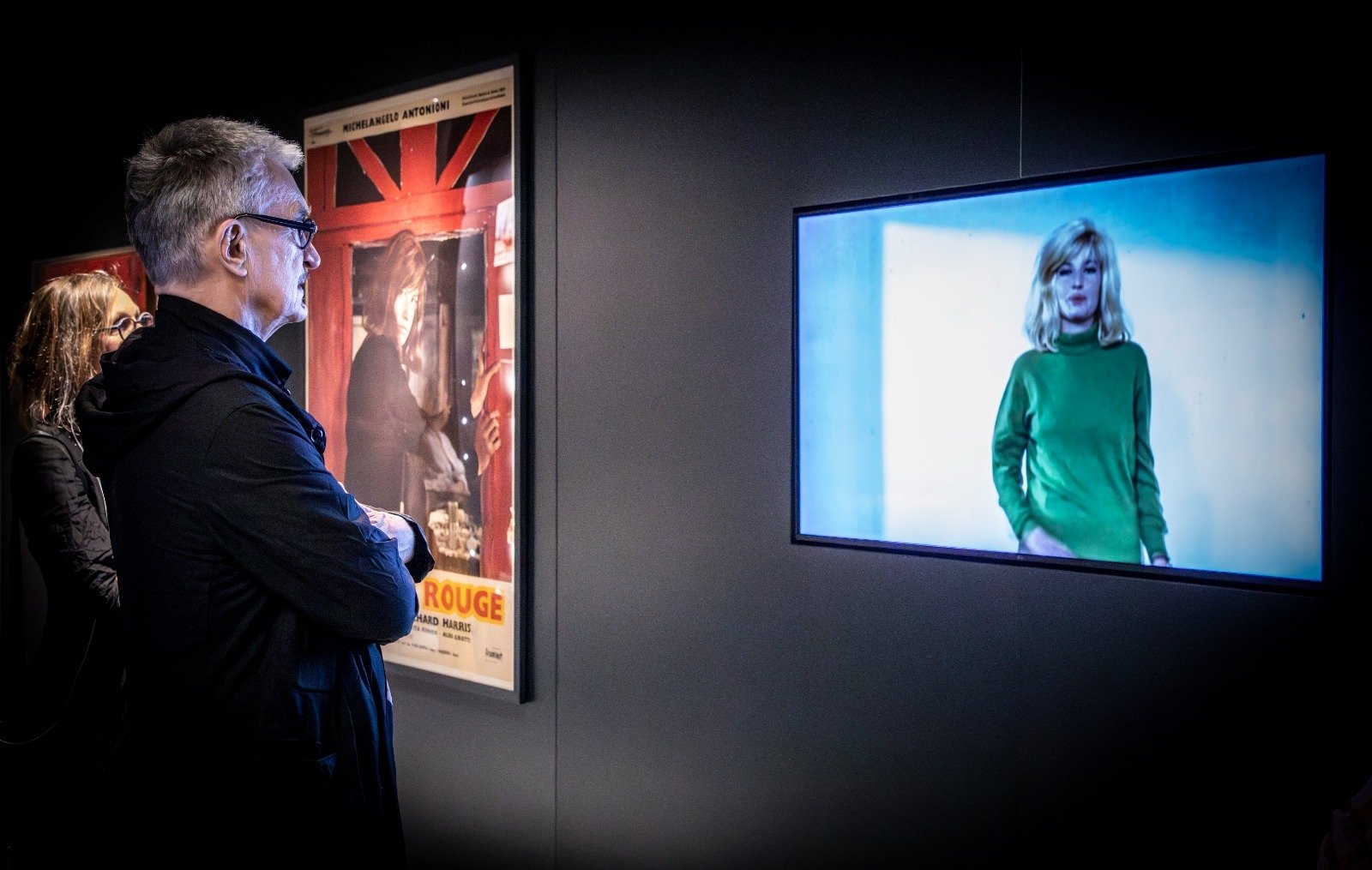
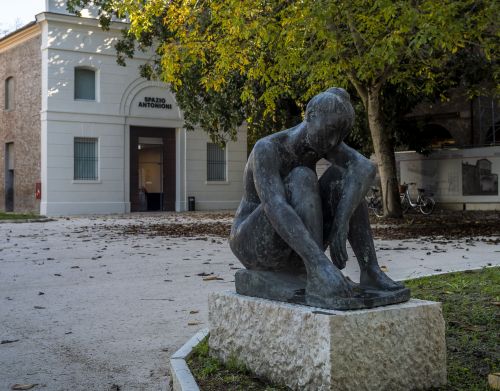
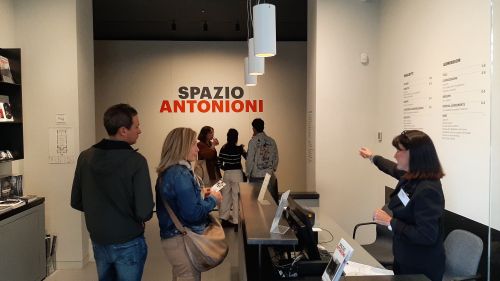
The final stop is Spazio Antonioni, the new museum dedicated to Michelangelo Antonioni, inaugurated in 2024 inside the former Contemporary Art Pavilion of Palazzo Massari. The museum is designed to showcase part of the director’s archive of 47,000 objects, documents, and materials. The exhibition unfolds through spaces created to evoke Antonioni’s atmospheres, and tells the story of 20th-century cinema through images, film reels, scripts, and original materials.
Ready to discover Ferrara step by step?
On the InFerrara website you’ll find a wide selection of tailor-made experiences for travellers who love to explore slowly and with curiosity. Guided tours, themed itineraries, and special activities will lead you to the city’s most fascinating places.
Discover all experiences at www.inferrara.it/experiences/experiences