
ITINERARY
Un passo nel Rinascimento
Potrebbe interessarti anche

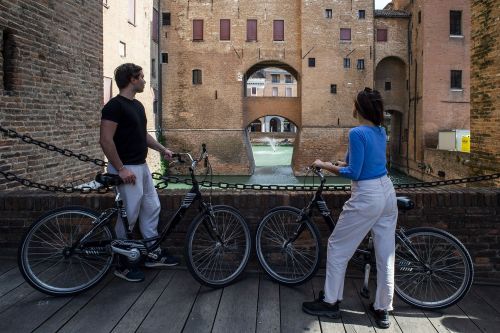
Sometimes, just a few steps are enough to cross an entire era. Ferrara, with its Addizione Erculea, is a city best read on foot: every stretch of road tells a story of intention, every turn reveals a vision of the future.
Commissioned by Ercole I d’Este in 1492 and designed by Biagio Rossetti according to rational principles and cosmological inspirations, with references even to astrology, it is considered the first example of a modern city in Europe.
For its outstanding universal value, Ferrara has been recognized as a UNESCO World Heritage Site, a rare case of a Renaissance city that has reached us almost perfectly preserved.
On this itinerary, we invite you to walk slowly and let the spaces speak for themselves.
Just a few kilometres, an abundance of beauty. A journey into the past that still looks ahead.
+1
Corso Ercole I d’Este
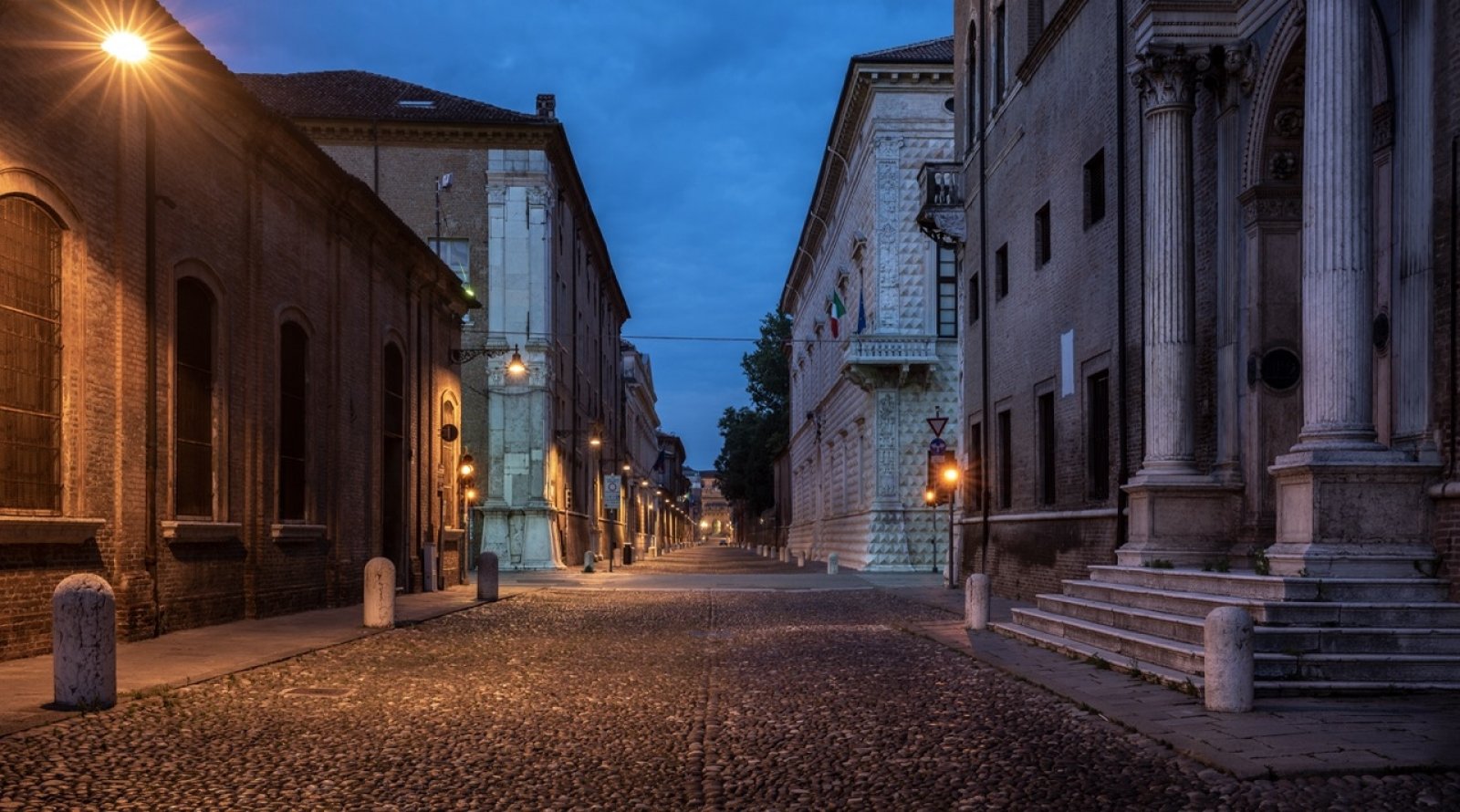
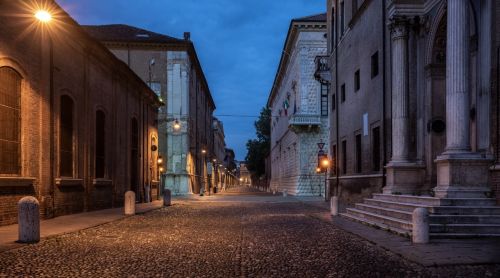
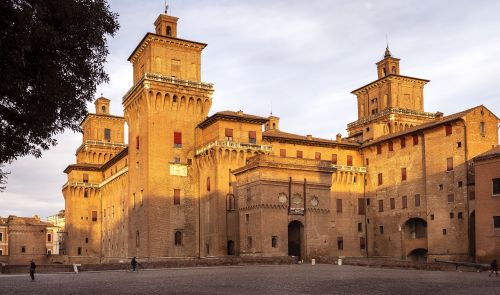
This elegant and striking avenue was designed by Biagio Rossetti to symbolize the order and power of Renaissance Ferrara. Wide, straight, and quiet, the Corso is meant to be experienced at a leisurely pace, framed by noble palaces and meticulously calculated perspectives.
Palazzo dei Diamanti and the Quadrivio degli Angeli
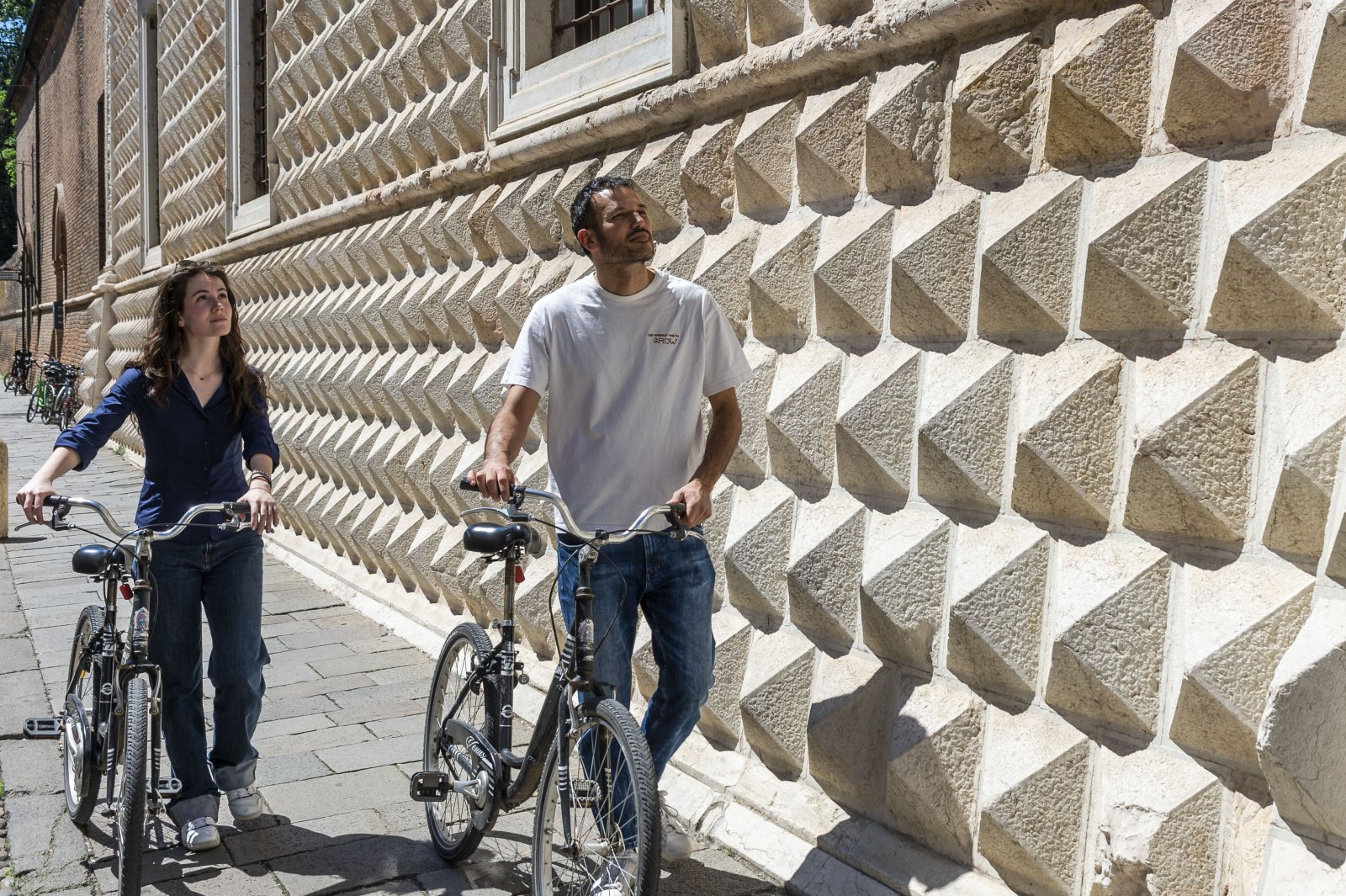
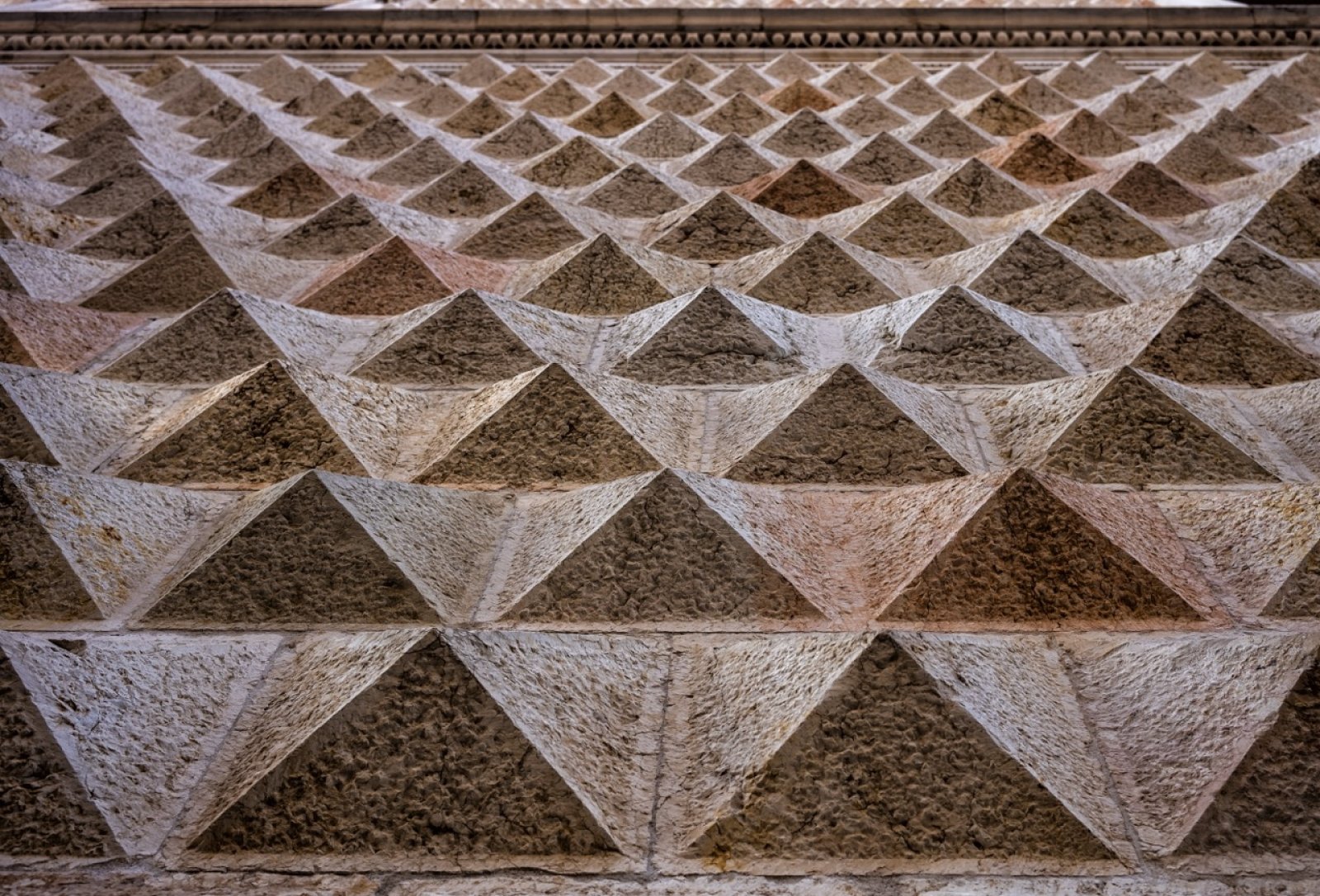
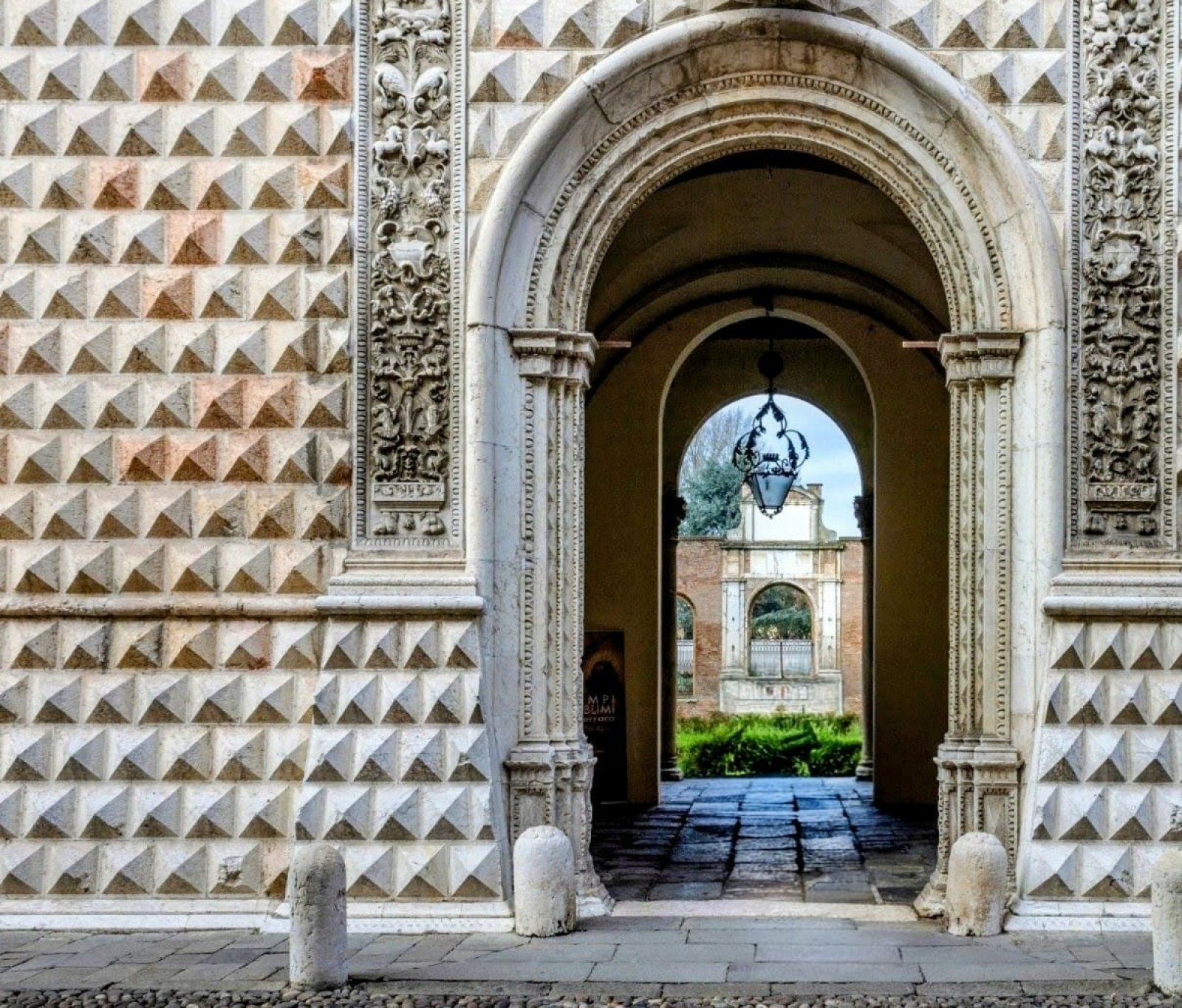
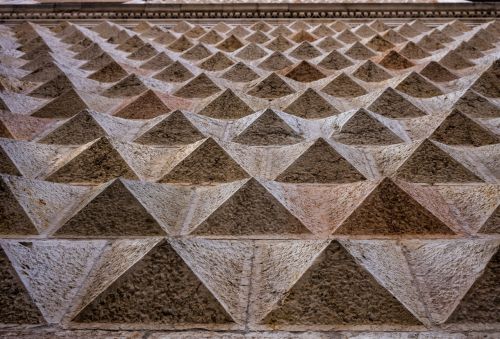
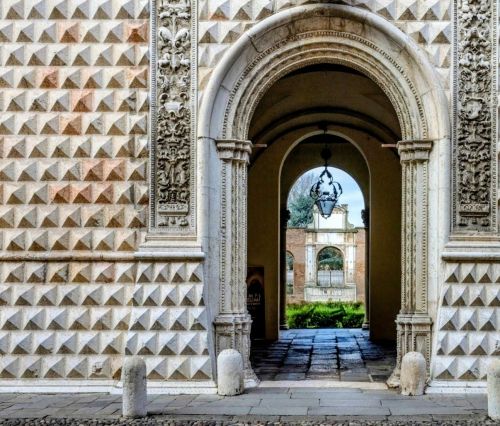
Impossible to miss: with its 8,500 marble diamond-shaped blocks, Palazzo dei Diamanti is the iconic masterpiece of the Addizione Erculea. Designed to be admired diagonally, it now hosts major contemporary art exhibitions and the National Picture Gallery.
Its sculpted corner is one of the most photographed spots in Ferrara.
At the intersection of Corso Ercole I d’Este and Corso Porta Mare lies the Quadrivio degli Angeli, the true geometric heart of the city. Four monumental palaces, including Palazzo Prosperi Sacrati, frame this crossroads where Rossetti’s urban vision takes tangible form: beauty, order, and power staged in four perfect angles.
Monumental Charterhouse
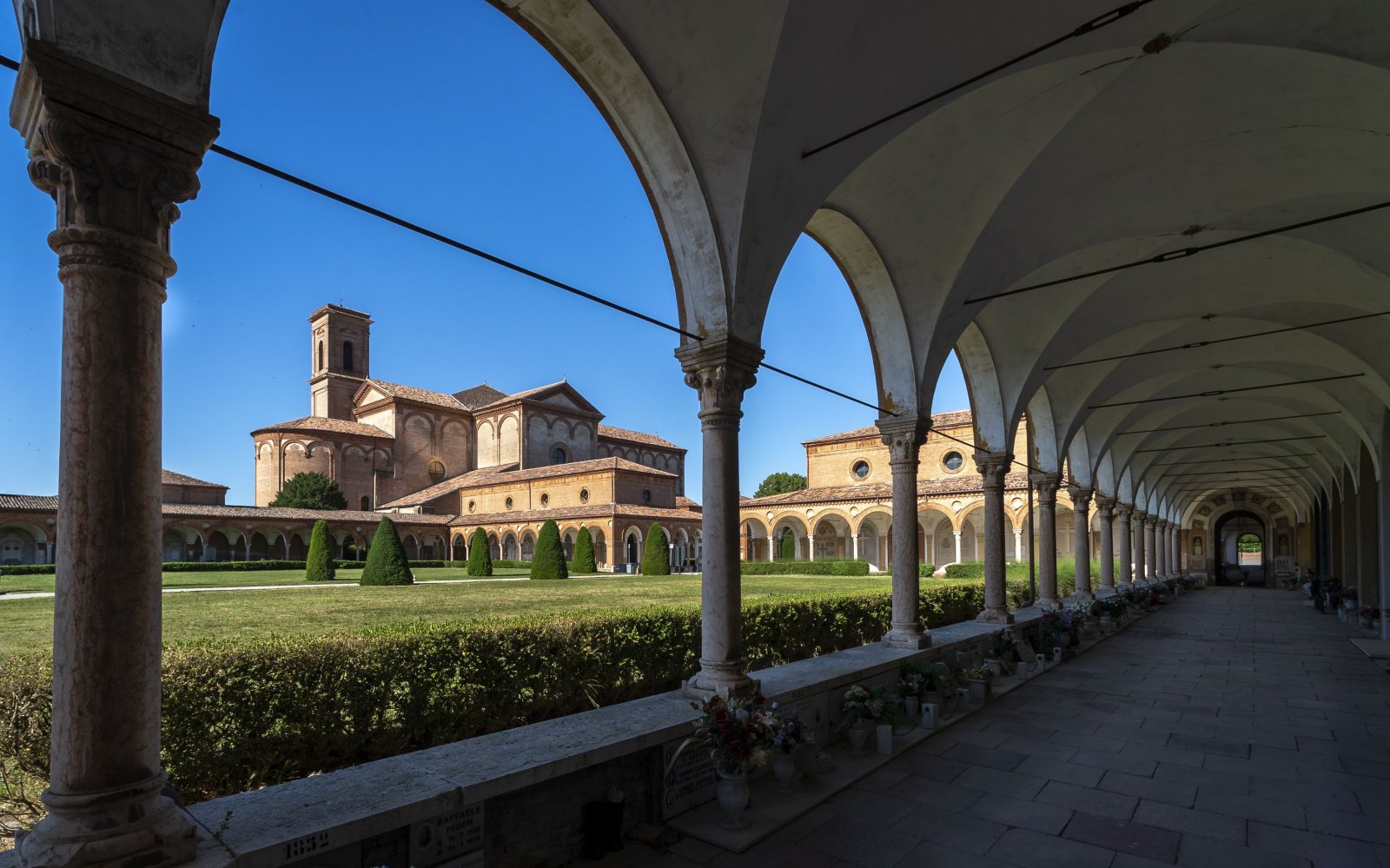
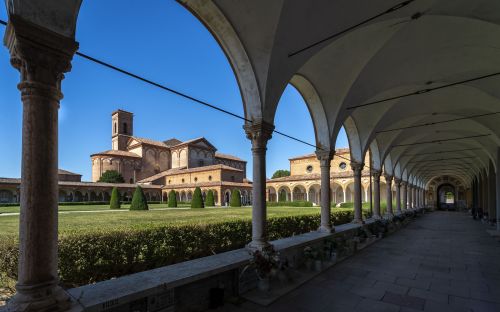
Continuing along Corso Porta Mare, you reach the city’s Charterhouse, originally a Carthusian monastery and later transformed into a monumental cemetery.
With the Artour app, you can explore artistic routes among curved porticoes, deep silences, remarkable examples of funerary art, and the sober façade of the Church of San Cristoforo.
Piazza Ariostea
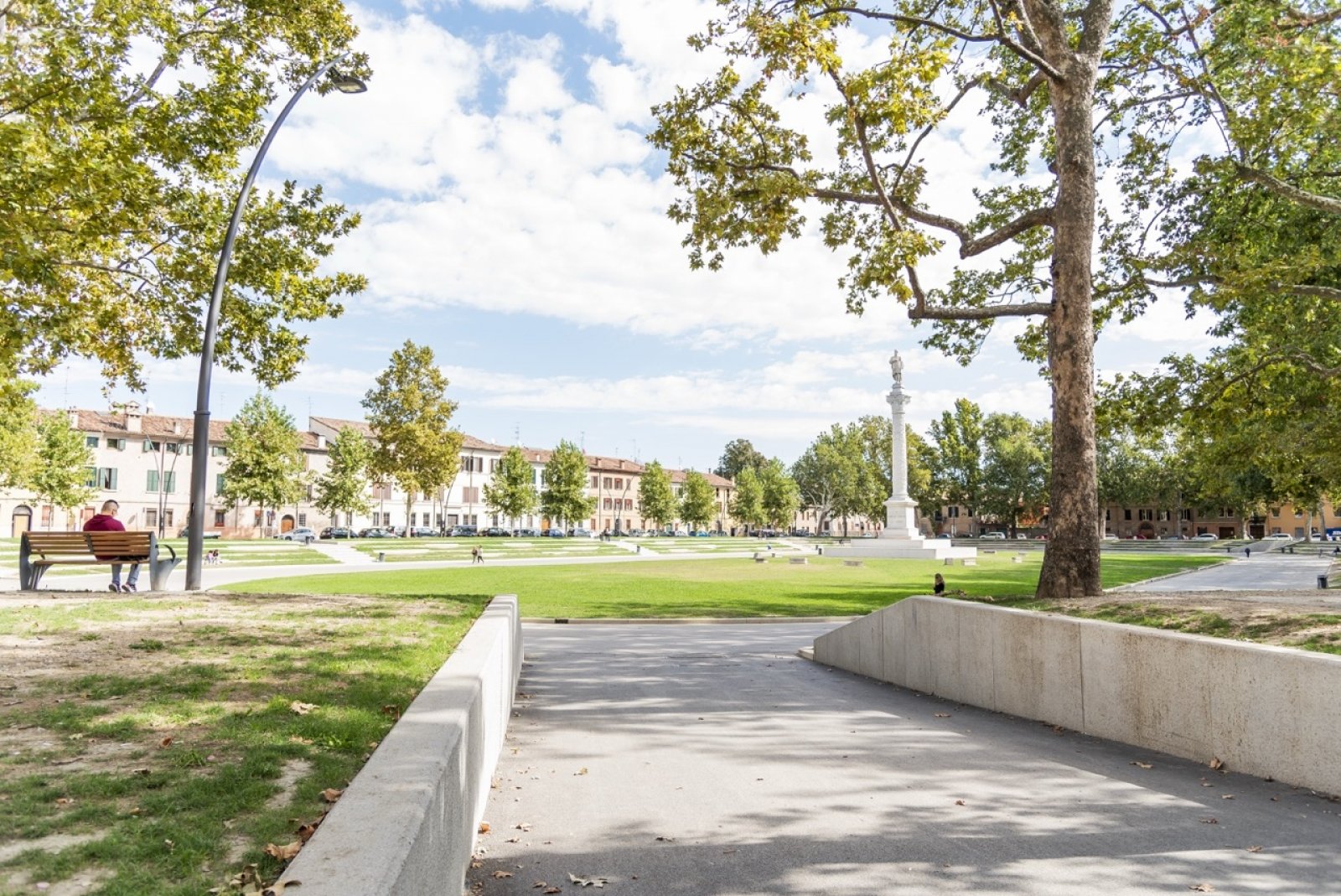
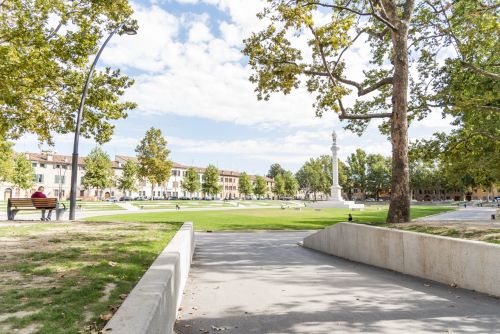
The final stop is one of Ferrara’s most famous squares, instantly recognizable for its oval shape, shaded by trees and dominated by the statue of the poet Ludovico Ariosto at its centre.
Originally created to host tournaments and public spectacles, today it is a vibrant hub of historic Ferrara, especially during the Palio, one of the oldest in the world, which brings the city to life every May.
Here, the Renaissance vision opens up to everyday life, with plenty of cafés and restaurants where you can stop for a meal or an aperitivo.
Countryside Within the City Walls
If you wish, you can end your walk with a small excursion outside the city… within the city.
This unique urban countryside was also designed by Biagio Rossetti as part of the Addizione Erculea, with the aim of providing Ferrara with an internal agricultural supply area, ensuring self-sufficiency in case of need.
Even today, this peaceful enclave stretches across nearly four hectares of fields, gardens, and vegetable plots, a surprising pocket of rural calm inside the city walls.
In less than 4 kilometres, Ferrara offers you one of the most fascinating urban revolutions in history, a true step back in time. This is where your journey begins.
Ready to discover Ferrara step by step?
On the InFerrara website you’ll find a wide selection of tailor-made experiences for travellers who love to explore slowly and with curiosity. Guided tours, themed itineraries, and special activities will lead you to the city’s most fascinating places.
Discover all experiences at www.inferrara.it/experiences/experiences